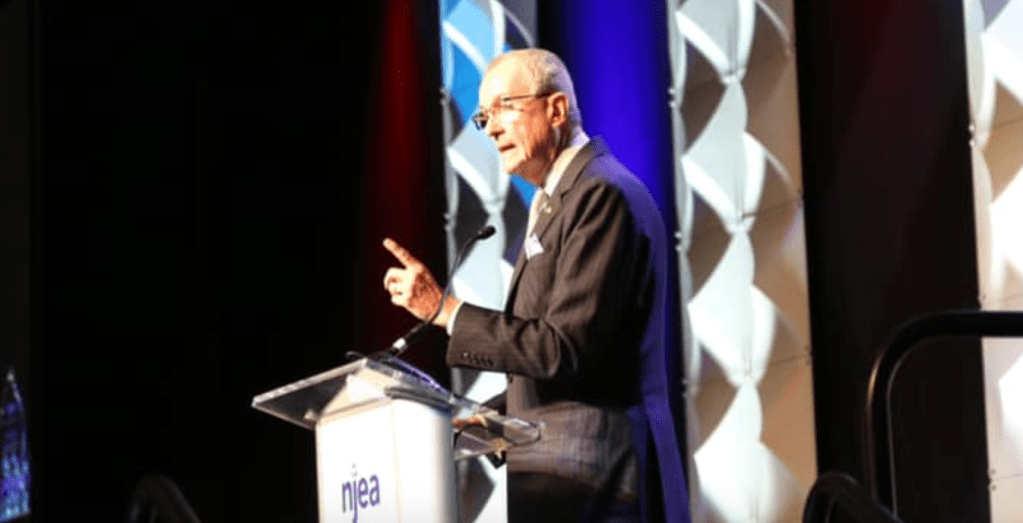
New Jersey’s Board of Education elections have historically been touted as nonpartisan. Candidates are not identified on the ballot with a political party affiliation.
But in an era when social media and cable news rev the emotions on many educational and cultural issues, is it still possible to keep politics out completely?
Middlesex Borough’s 2023 school board election is the only contested local race on the Nov. 7 general election ballot. Republican candidates for mayor and Borough Council are unopposed.
The board race has echoed the cultural arguments raging in the nation’s state capitals, pitting Republicans and those more philosophically conservative versus Democrats and the progressively minded.
The six-candidate field includes current Board President Todd Nicolay, board member Sharon Schueler, Amelia Sherr, Amanda Bayacheck, Lucia Laranjeiro, and John Sousa. Sherr, Bayacheck and Laranjeiro are running together under the Common Sense Leadership ballot slogan.
Sherr is the wife of former Republican Mayor Robert Sherr, who currently chairs the Joint Land Use Board. Schueler is the wife of former Democratic Councilman Robert Schueler.
The Common Sense Leadership slate’s supporters have posted on social media that the team favors parental notification when a child is gender transitioning at school. That has been a hot-button state issue. Several local school boards have sought to end a parental notification restriction. Democratic Gov. Phil Murphy’s administration has taken them to court.
Another point of contention was a candidate forum held on Oct. 11 by the Middlesex Education Association, the district’s teachers’ union.
The Common Sense slate did not attend, a tactic that’s drawn questions. The slate’s supporters countered by questioning if the MEA members were attempting to influence the election of their own bosses.
Parental rights concerns and greater desire for input into educational decision-making erupted nationwide in 2020, as districts agonized over Covid masking and when to return to in-person instruction.
In Middlesex, doubts about leadership have continued as exemplified by the 2023 campaign. Along with the parental notification debate, the Common Sense team has questioned recent standardized test scores and the handling of a rat infestation at one district school.
Some have theorized that the shifting of New Jersey school board races away from their former April dates to the November general election has helped politicize the process of electing members. That practice began about a decade ago in the Garden State.
More than 40 states currently require nonpartisan local school board races, but some are considering changes that would mandate or allow candidates to list political party affiliation on the ballot.
As some aligned – at least philosophically – with the respective political parties slug it out for Board of Education seats, who can Middlesex’s independent voters rely on for an impartial assessment of their local schools?
Earlier this year, Timothy Purnell, executive director and CEO of the New Jersey School Boards Association (NJSBA), opined on the importance of attempting to keep school elections nonpartisan.
Nonpartisanship, Purnell wrote on the NJSBA website, “is a contributing factor in New Jersey’s strong system of public education.”
“Rather than being constantly reminded of political differences on a board, the fact that members don’t run with a political party designation allows them to place the focus where it should be when making decisions: on the community’s children,” Purnell added.
“Putting political parties front and center at the board table can lead to distraction and entrenched conflict,” Purnell wrote.
Meanwhile, it is easy to understand why – given their seeming Republican leanings – the Common Sense candidates opted out of the MEA forum.
In 2021, the Sunlight Policy Center published a paper calling the New Jersey Education Association – the MEA’s parent organization – “New Jersey most powerful special interest.” Sunlight Policy Center is a nonpartisan research organization.
After analyzing state Election Law Enforcement Commission filings, the Sunlight Policy Center found the NJEA had spent 93% of its political donations on Democratic candidates.
“Like any special interest, the NJEA has its own agenda and supports politicians that it knows will be friendly to its interests,” the Sunlight Center found. “But as a public union, the NJEA is also able to ‘elect its own bosses,’ whether on the school board, in the mayor’s office or in the legislature. And where there are partisan elections, those politicians are Democrats.”
Reminder
Subscribe to Inside – Middlesex. Enter your email address to subscribe to this blog and receive notifications of new posts by email. It is absolutely free.
 Inside - Middlesex
Leave a comment