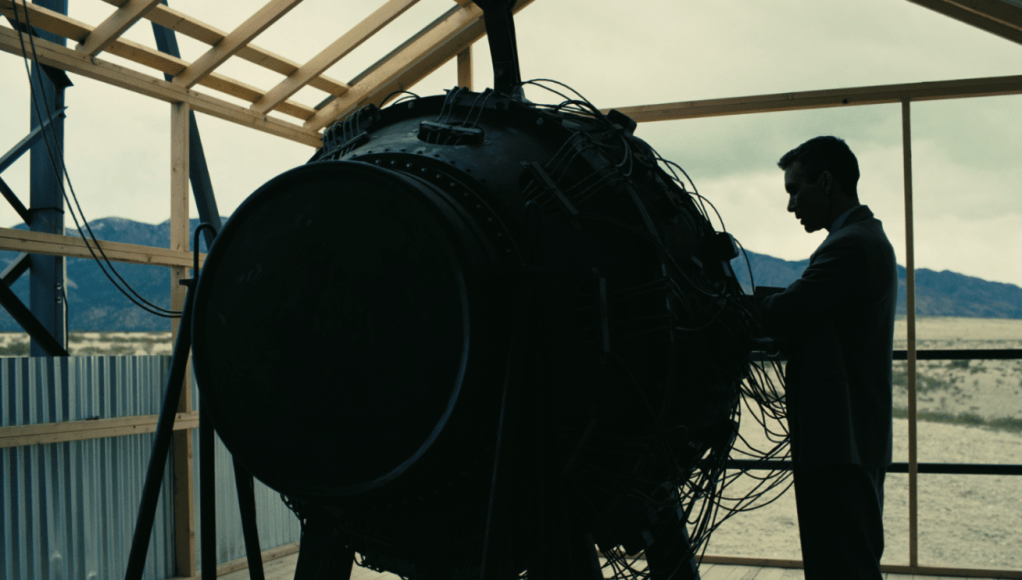
While explaining the connection between four key Manhattan Project sites, J. Robert Oppenheimer went to the blackboard.
The scene was from the 2023 movie that bears his name. Actor Cillian Murphy was playing the atomic bomb physicist, but it’s reasonable to assume this bioflick was largely based on fact, even the scenes that could not be taken literally.

Oppenheimer recited the four locations in different corners of the country, places such as Chicago and Tennessee. He wrote the name of each on the blackboard and drew a bold white chalk “X” connecting them. Railroads, he noted, would provide the X. They’d be used to link the sites in a low-key way and camouflage their roles in atomic weapons development.
Any viewer looking for mentions of the Middlesex Sampling Plant (MSP) in the blockbuster film would be disappointed. But the blackboard scene provides an important clue on why atomic bomb uranium sampling was conducted in the 1940s on Mountain Avenue, in an otherwise unlikely place. The MSP was not one of the four key sites, but it had something in common with them and other secondary locations.
Like those locales, there was nearby railroad access. In the MSP’s case, train tracks were literally outside the door.
From internet sources, it’s easy to conclude the uranium and other materials that were handled at the MSP arrived via train. Uranium ore from the Belgian Congo used in the Manhattan Project research during the 1940s was shipped to port in the New York City area. The MSP – then known as the Perry Warehouse – was chosen as an atomic research site because of its proximity to the New York piers, according to a federal government document available on the Library of Congress web site.
The document is viewable at https://memory.loc.gov/master/pnp/habshaer/nj/nj1600/nj1601/data/nj1601data.pdf
U.S. Army Corps of Engineers reps attended the October ceremony marking the MSP’s recent transfer to Middlesex Borough ownership. When asked by Inside – Middlesex, they acknowledged railroad proximity was likely a key factor in the Manhattan Project research coming to Mountain Avenue.
The Army Corps began leasing the Perry Warehouse in October 1943 from the American Marietta Corp. It had formerly been an asphalt paint facility.
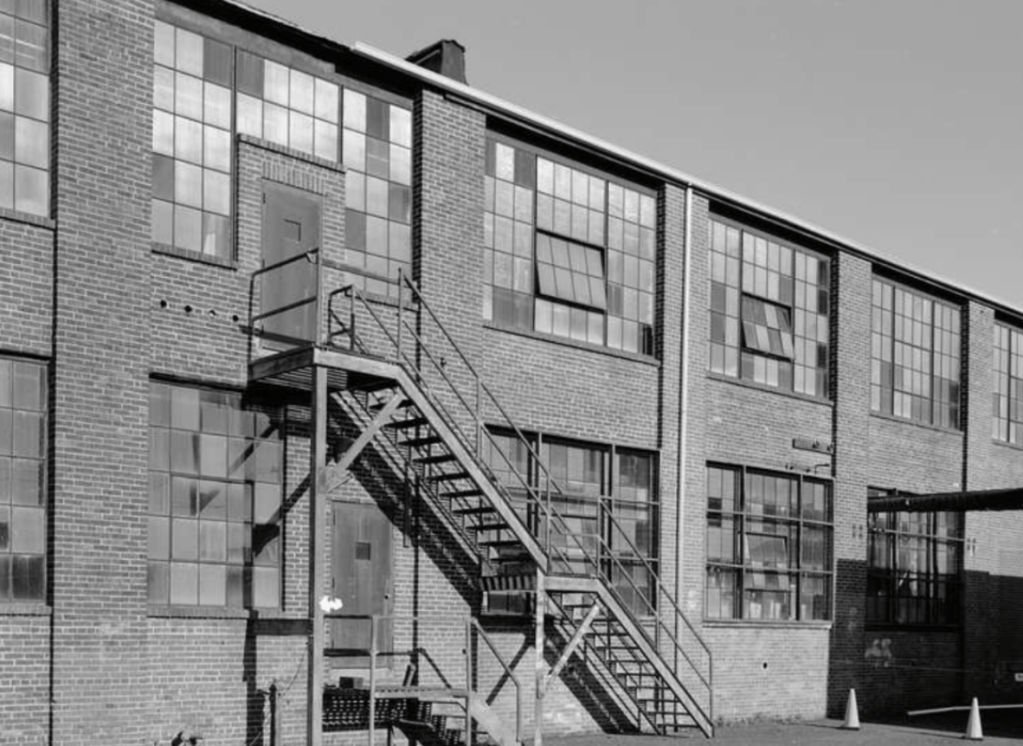
For the Manhattan Project, ore was sampled, weighed and assayed at the MSP. An assay is a process of analyzing a substance to determine its composition or quality. Other MSP functions were to thaw, crush, dry, screen, store, sample, weigh, and ship the uranium ore to refineries.
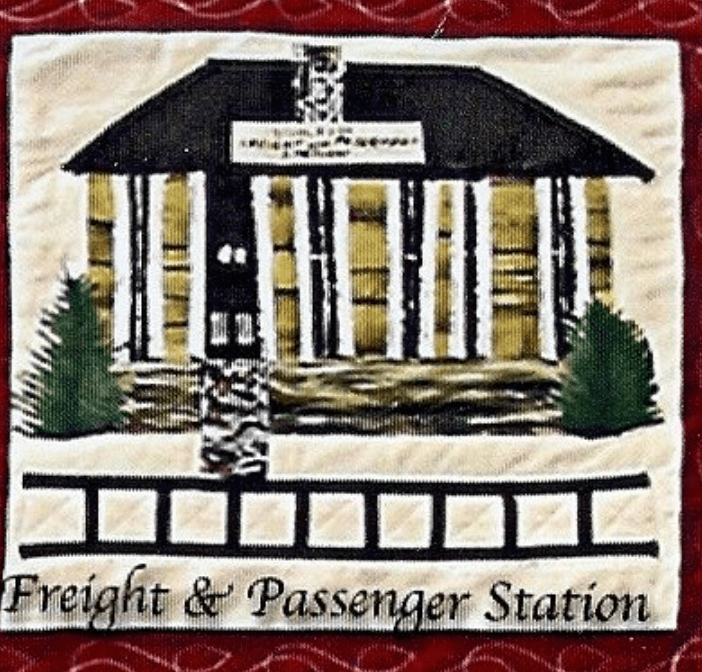
At that time, Middlesex had a small train station, located not far from the MSP, in the proximity of the Lincoln Statue. The structure was known as the Middlesex Freight & Passenger Station. Freight and mail was unloaded at the station.
Once the ore was sampled, weighed, and assayed, it was shipped from the MSP to the Linde Refinery, in Tonawanda, N.Y., where it was processed. Tonawanda, a Buffalo suburb, is known as a railroad town. From there, atomic material underwent further processing at several other United States locations before being processed into plutonium in Washington state. Then, it went to Los Alamos, N.M for use in atomic bomb development.
When the federal government began leasing the MSP, it contracted with a company for labor and security police. The feds contracted with a separate firm to represent the U.S. government in the technical aspects of the sampling.
In September 1946 – roughly one year after the dropping of atomic bombs on Hiroshima and Nagasaki – the Atomic Energy Commission resorted to condemnation to purchase the MSP site from American Marietta.
It’s possible that the move was intended to give the feds greater control of the site and strengthen security as the nuclear arms race began with the Soviet Union. New buildings were constructed on the 9.6-acre site, including a storage house, and a chain link fence was erected around the property.
By 1967, all Atomic Energy Commission work stopped at MSP and the site was decontaminated. it was given to the General Services Administration the following year, which transferred the facility in 1969 to the Department of the Navy. From that point until 1979 the buildings there were used by the U.S. Marine Corps as a reserve training center.
Reminder
Subscribe to Inside – Middlesex. Enter your email address to subscribe to this blog and receive notifications of new posts by email. It is absolutely free.
 Inside - Middlesex
Leave a comment