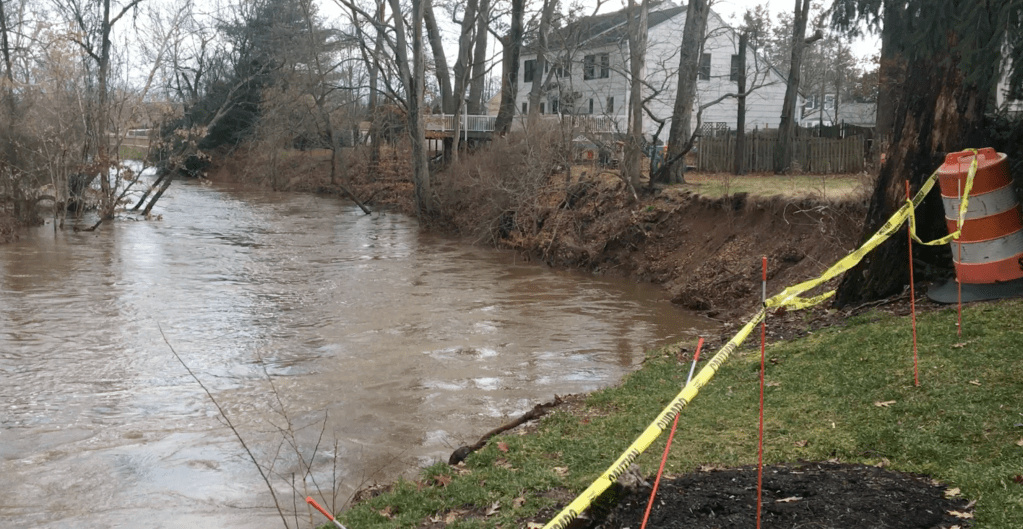
The brown water moved by in a swift current, at times carrying tree pieces and swirling in spots. In the distance could be seen a flood wall, meant to protect homes on mornings like this, after several inches of rain fell the previous night.
Instead, two Heather Lane homes sit precariously near a small cliff, carved out of backyards by what is supposedly a stream. But on days like this, the stream resembles a small river along the border with Green Brook.
This is Ken Beck’s backyard scene on Wednesday morning, Jan. 10. Roughly three inches of rain was dropped on Middlesex Borough the prior night. By late morning, Beck feared the elevated stream level behind his house might rise even higher, due to high tide and the scheduled closing of a flood gate in nearby Bound Brook.
Bigger questions remained. Would the latest storm hasten further erosion to Beck’s property and others on the stream’s edge, threatening their habitability? Would the now water-logged area delay the borough’s planned attempt to temporarily fortify the banks?
Beck and his family have lived in their home for roughly 17 years. His picturesque backyard, however, changed dramatically, he says, following Hurricane Ida in 2021.
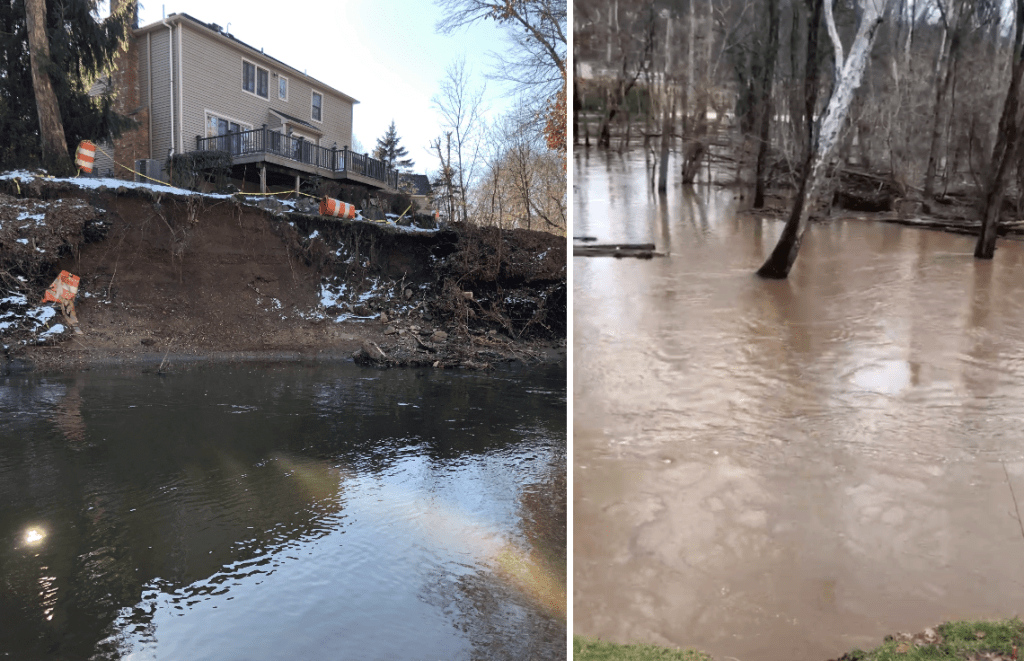
That powerful storm, combined with increased water velocity from a nearby flood control pumping station, seriously eroded his backyard and a neighbor’s property, according to Beck. The neighbor’s home was ruled uninhabitable in March 2022. Beck has continued to see several feet of his backyard periodically lost. Local officials fear the problem could eventually affect nearby Holly Court.
Middlesex officials have attempted to get state and federal officials to intervene without success. During a Zoom call three months ago, U.S. Army Corps of Engineers reps disavowed any responsibility for the erosion threat. They asserted to borough officials that the problem would have occurred even if the Green Brook Flood Management Project had never been started.
The borough has applied for a grant from the state’s Resilient Communities Program which could pay for an expensive permanent fix to the erosion issue. State Sen. Jon Bramnick has written a recommendation letter, but the request is in the hands of state officials.
That’s left Beck and several neighbors to endure worrisome days like this and continue to consider their options.
“This is not legitimate,” Beck says of the water being pushed through along his property’s edge. “It’s just a nightmare.”
While local officials have attempted to intercede, the hard line taken so far by the Army Corps has Beck and his neighbors mulling the hiring of any attorney. The filing of a tort claim against the feds over the flood control project is being considered.
“I think that’s what it’s ultimately going to come down to,” Beck said. “That’s what we’re going to have to do. We have all spoken about this, but nobody’s pulled the trigger yet.”
Beck has, however, continued to pester the Army Corps about the situation. He received a phone call this week from the Corps and has continued to press his case through news outlets.
“It’s back to the same story line,” Beck said of the Corps. “They (claim they) didn’t cause any of this issue. I’ve been sending photos to the media and blasting their legal department in New York City, and I don’t think they like that.”
Beck, though, is left to deal with the reality of the situation. His home’s long-term habitability is threatened and realtors have told him it’s “unsellable.”
In the past year, Beck estimates he’s lost 10 to 12 feet off his backyard. Two big trees fell into the stream during an October storm. “We heard them go,” he said.
“That oak right there, it’s just a matter of time because it’s getting undercut,” he says of a a remaining tree. “Hopefully it will go into the stream and not towards my house.”
Beck sat-in on the October Zoom call with the Army Corps. The report discussed at that session, he noted, outlined recorded channel velocities that the feds acknowledge would cause erosion.
“You’ve mitigated a flooding area and deflected the water down here and we’re the ones who have to suffer,” he said. “It just doesn’t make sense. You alleviate flooding, but if you know erosion was going to be an ongoing issue, why wouldn’t you address that?”
The borough’s envisioned temporary stream bank fix entails the use of large cement blocks, reinforced with rebar. They would be installed over a 200-foot-long by 6-foot-high area along the properties owned by Beck and his neighbor .
Supply chain issues delayed their intended installation. It was then eyed for later this month. But this week’s rain and flooding will likely make it impossible to bring in the needed heavy equipment until the area dries out substantially. Access would be from the Green Brook side of the stream.
“Anything is better than nothing,” Beck said of the short-term strategy. “The town is well aware it’s a band-aid. It’s a temporary fix while waiting for grant money.”
Reminder
Subscribe to Inside – Middlesex. Enter your email address to subscribe to this blog and receive notifications of new posts by email. It is absolutely free.
 Inside - Middlesex
Leave a comment