We’re no longer social distancing by staying in our homes, away from other families. Many employers are requiring their staffs to come back into the office. People are again out and about, packing sporting events and restaurants.
Still, you’d be hard-pressed to find many people who have not had a relative, neighbor or co-worker contract the coronavirus during the past six weeks or so.
Covid has returned. For most, it is no longer the life-threatening experience of 2020, but masked shoppers are more plentiful in the supermarket and other public places than even last fall.
The case numbers in Middlesex County and nearby Somerset have increased, but not as much as in other parts of New Jersey. Is it just a matter of time before the Covid infection rate climbs higher here as well?
Roughly two weeks ago on Jan 6, pbs.org published an article entitled, “COVID is surging again. Here’s what to know and why experts encourage caution.”
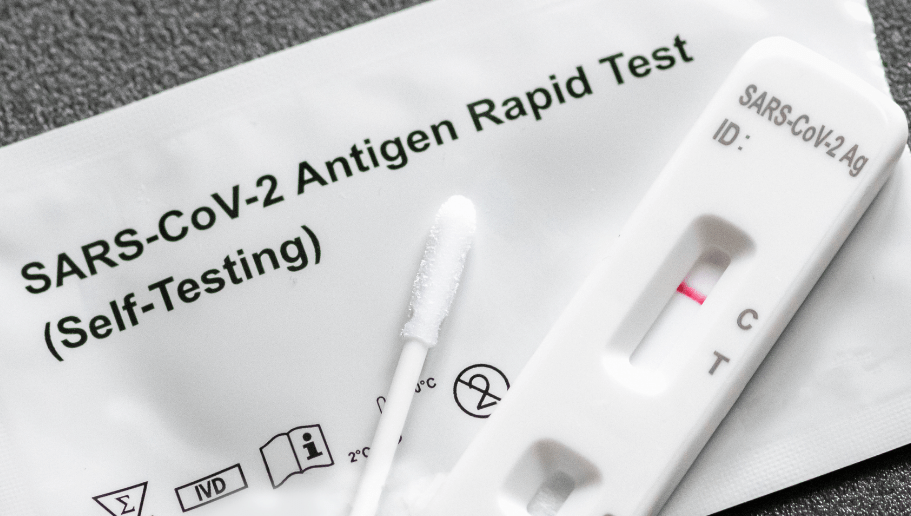
For Middlesex Borough residents who want to stay on top of possible household infections, there are a couple of options to obtain free COVID-19 test kits.
They are being offered for free to Middlesex residents who stop by the municipal building on Mountain Avenue during business hours, while supplies last.
Also, a kit containing four rapid antigen Covid-19 tests is again being offered to each household in the United States through the United States Post Service. If an order has not been placed for your address since the program reopened on Sept. 25, 2023, you can place two orders by visiting: special.usps.com.
Middlesex County was seeing 12.7 Covid hospital admissions per week, per 100,000 residents as of Jan. 16, according to the website covidnow.org. With the county’s population at roughly 830,000 people, that equated to about 105 admissions.
Covid patients were filling about 4.2% of Middlesex County’s hospital beds as of that date, the site posted.
Somerset County has roughly 330,000 residents, but its 12.7 admission rate and 4.2% hospital bed rate reflected the situation in adjacent Middlesex County.
Both counties were below the statewide New Jersey rate of 16.5 weekly Covid admissions per 100,000 citizens and 6.1% hospital bed rate.
On covidactnow.org’s color-coded Garden State map, both Middlesex and Somerset counties were gold, meaning medium risk of infection. But both counties abutted others that currently are colored orange, meaning high community risk, higher admissions rates per 100,000 residents and higher percentages of hospital beds filled.
For Somerset, the higher-case neighbors are Hunterdon and Morris counties. Middlesex abuts Monmouth County, which currently has higher community risk.
The “Covid is surging” article includes an interview with infectious disease epidemiologist Jessica Malaty Rivera. The article states that a new dominant variant, JN.1, has quickly spread to account for more than 60 percent of cases.
“To be honest, it’s not quite unusual, the virus that causes COVID-19, SARS-CoV-2 continues to evolve as more and more people become infected, and the virus makes copies of itself,” Rivera said. “It mutates, it changes, it gets better at evading our immune systems and making people sick.”
“What’s encouraging is that because of our hybrid immunity in the population between previous infections and vaccination, not as many people are becoming seriously ill and dying, though we are seeing hospitalizations continue to increase as more and more people become infected,” Rivera added.
“I think we need to be preparing ourselves for living with SARS-CoV-2, the virus that caused COVID-19, because it is well established in the human population and among other populations in the animal kingdom,” Rivera said. “And because of that, the odds of us getting rid of it completely eliminating and eradicating it is unlikely.”
Rivera continued that she believes Covid is “here to stay” and that mitigation efforts such as encouraging sick people to stay home should continue.
“It’s difficult to see a lot of people think about Covid as not that serious, think about masking as something that was an artifact of the past,” Rivera said. “It is a very, very normal thing to mask when you’re sick, to mask when other people are immunocompromised. It was part of our public health infrastructure and health care settings.”
“So the, you know, how political it’s become, how contentious it’s become is quite discouraging,” she said, “because these things are effective at helping out reduce harm which is the basis of public health.”
Reminder
Subscribe to Inside – Middlesex. Enter your email address to subscribe to this blog and receive notifications of new posts by email. It is absolutely free.
 Inside - Middlesex
Leave a comment