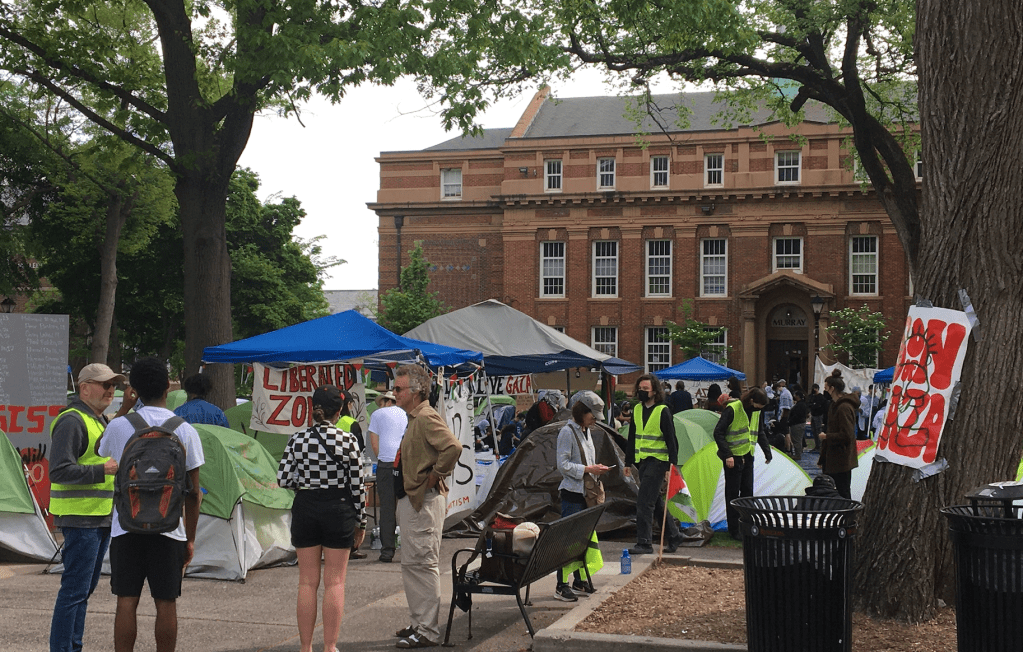
The large crowd on the green at Rutgers University’s Voorhees Mall chanted and applauded the several speakers who addressed them via microphone.
This scene was from the late 1970s. Word had spread that a popular RU history professor wasn’t going to receive tenure. His students and colleagues showed their displeasure to the university.
Memories of that afternoon on the same lawn more than 40 years ago came flooding back on Thursday morning, upon witnessing the student encampment there.
By late Thursday afternoon, the several-day protest was over. Campers vacated the green after a meeting with university officials. Protestors claimed a victory after Rutgers administration granted some of their demands.
There was no agreement to the main demand, that Rutgers divest itself from Israeli business interests. But reportedly, the administration agreed to review such a withdrawal. Well, okay…
Rutgers University in New Brunswick has an active protest history. There have been others much more consequential than the late-1970s student effort to support an instructor.
The Vietnam War era saw anti-war demonstrations. In the mid-1980s, students successfully demanded the school’s divestiture from doing business with South Africa due to apartheid.
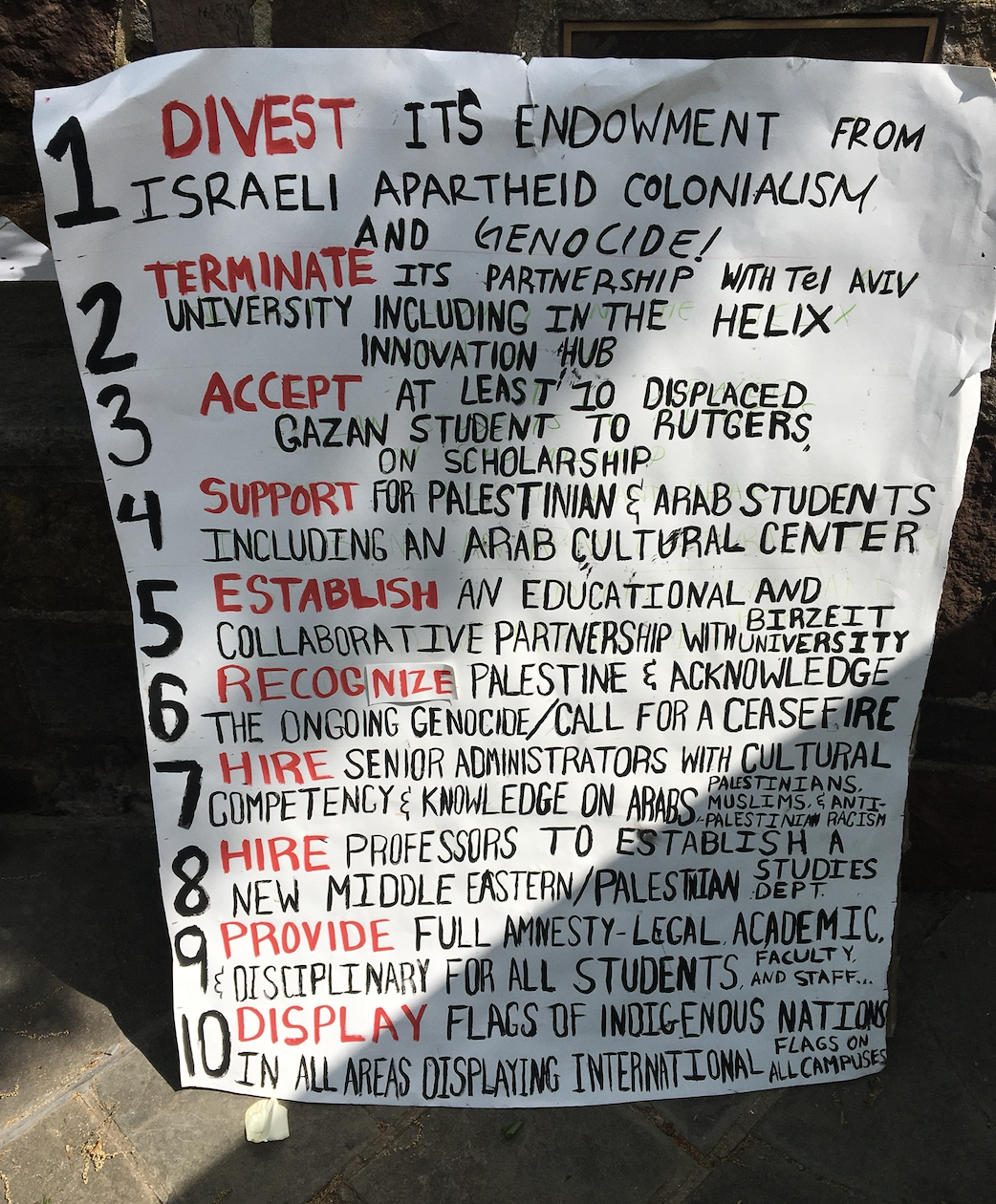
This week’s protestors sought Rutgers divestment from Israel, an end to its partnership with Tel Aviv University and other steps. At issue, was Israel’s ongoing incursion into Gaza in the retaliation for the Oct. 7 attacks by Hamas. It’s estimated that more than 30,000 Palestinians have been killed in Gaza during the military operation.
Rutgers University postponed Thursday morning exams and other academic activities due to “anticipated escalation” of the protest and out of an “abundance of caution.” But perhaps it was the exam disruption that finally cause the school to decide a resolution was needed.
One social media post by the Rutgers Encampment for Gaza, had stated that the protestors “are not leaving until our demands are met.”
The encampment’s Community Guidelines included:
- Do not interact with Zionists and agitators.
- Do not interact with admin or police officers.
- Do not interact with the press; direct them to individuals with press hats.
- Respect the guidance of organizers.
The tent enclave began on Monday. The students populating it three days later seemed passionate but a bit worn out, weren’t forthcoming with a lot of information, and appeared to have been well-coached. A few had neon vests as did a few other older adults who were hovering the vicinity.
University police were stationed nearby, keeping an eye on the proceeding.
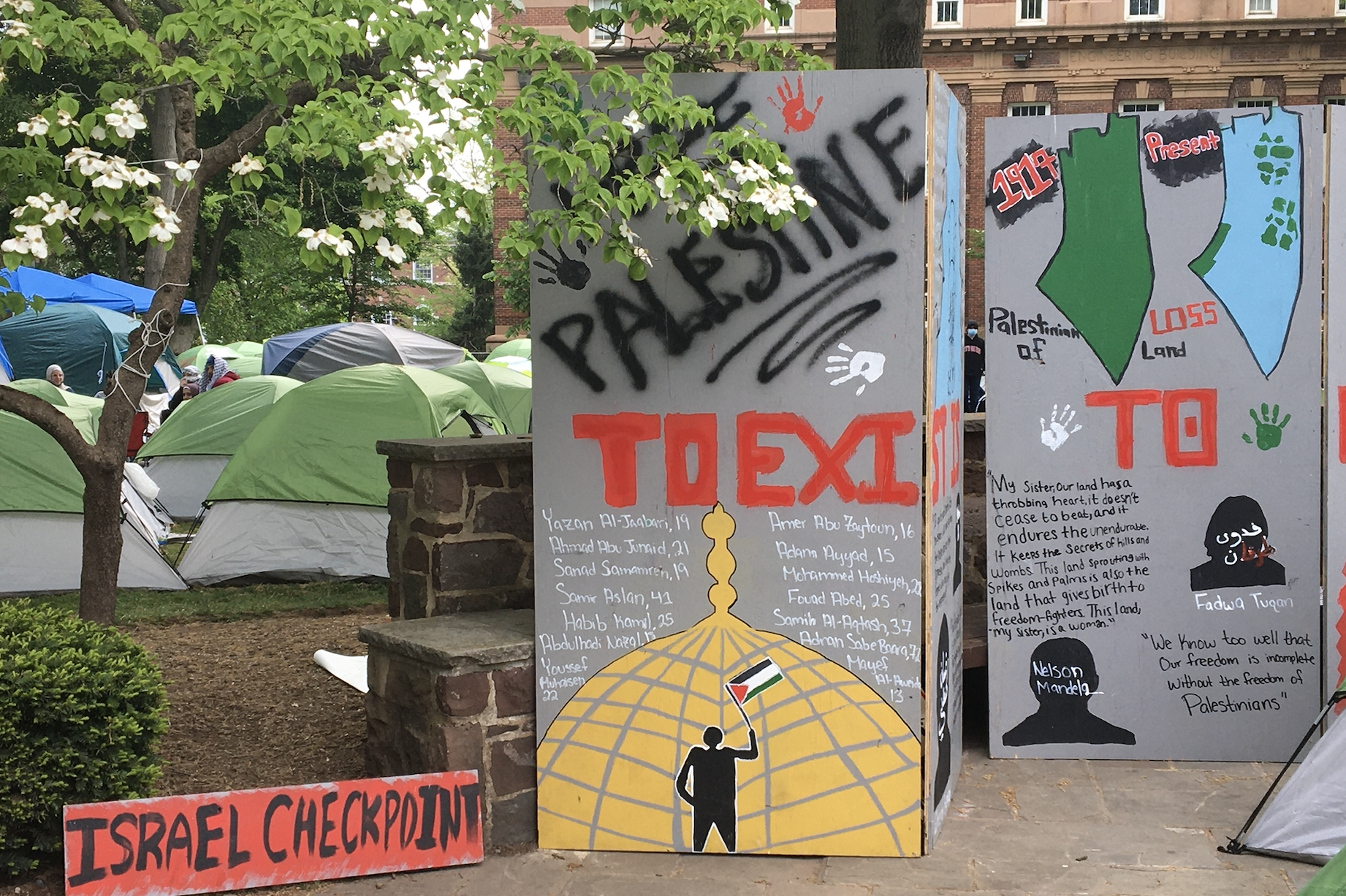
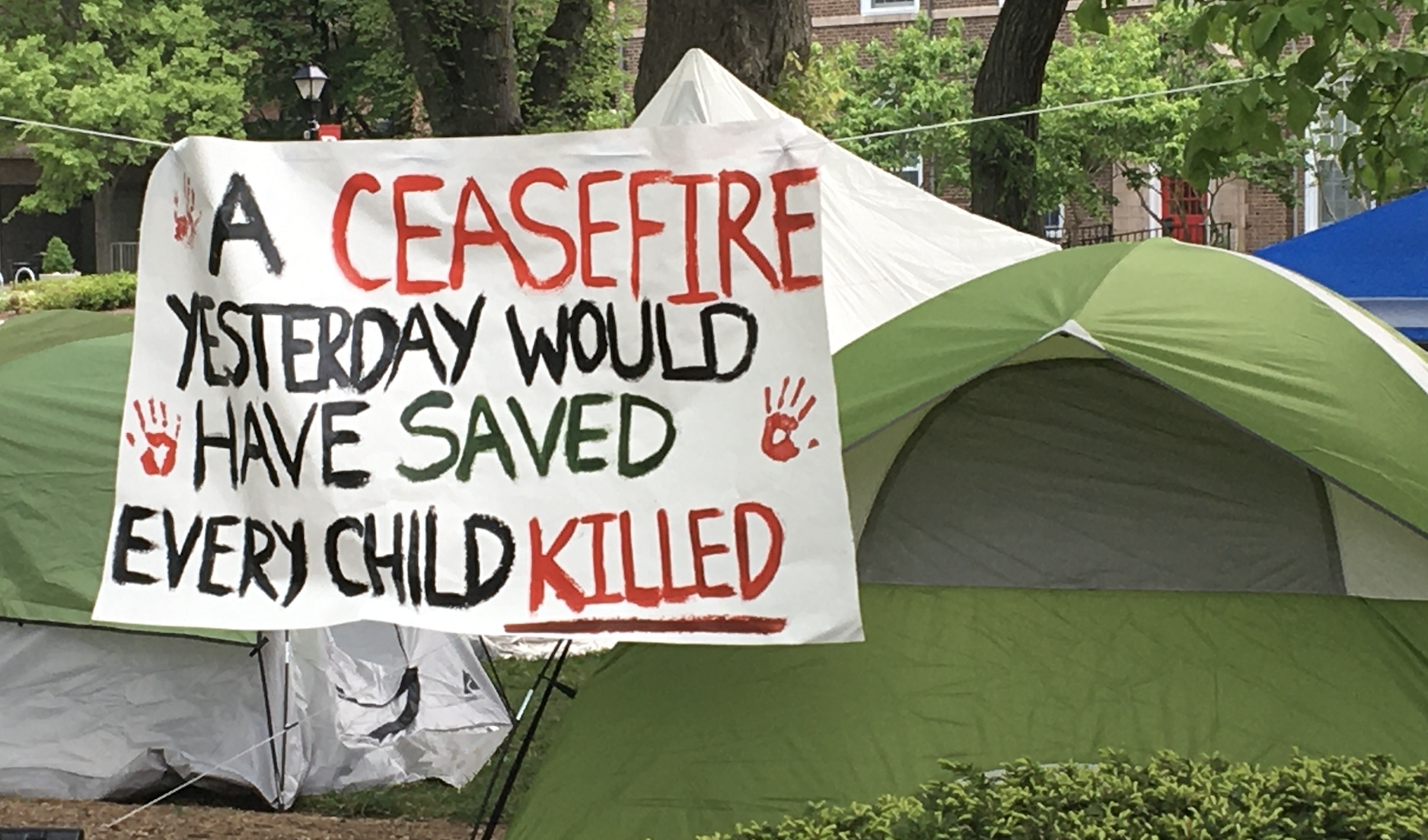
There were plenty of signs criticizing Israel for its retaliatory invasion. One tent included a sign proclaiming “Liberation Zone.” But it was hardly liberated.
In fact, entrance was somewhat-guarded. The access of Inside – Middlesex was blocked by about four student-protestors when an attempt was made to get closer to a speaker who was addressing others gathered there.
“Your presence might make them uncomfortable,” one protestor explained.
It wasn’t the only vague statement uttered.The protestors were hazy on whether they were all truly Rutgers students or what major they are studying. They also tended to be masked, somewhat obscuring their identities.
Asked about the dearth of details, one female protestor replied, “It’s not the vibe today.”
One protestor did blurt out that he was from Dayton, Ohio. He was asked why he came all the way from Ohio earlier in the week. “There was nothing going on out there,” he replied.
Another protestor – trying to be more helpful than his colleagues – offered that the group was linked to the Endowment Justice Collective.
The EJC formed in 2019 to research where Rutgers invests its money and attempts to hold the university accountable. A coalition of Rutgers organizations, the EJC is currently advocating for an endowment fund that is not invested in what is viewed as “Israeli apartheid.”
One online source refers to the EJC as a coalition of Rutgers students, workers, faculty and alumni.
So, while believing in their cause, it appeared the younger protestors in the group weren’t driving this activity. Perhaps that fell back on the neon-vested adults mentioned earlier.
True or not, it was easy to have that suspicion, given news reports that a 63-year-old activist was arrested this week at an anti-Israel protest at Columbia University. NYC police referred to her as a “professional agitator.”
Apparently, not all Rutgers students bought into the concern for Palestinians. One online news organization interviewed a few in a Wednesday article headlined, “‘Protest Fatigue’: Some Rutgers Students are Tired of Protests, Want Encampment Gone.”
“They have a list of demands,” said Brandon, a junior Rutgers student who was quoted, when asked about the protestors. “Half of them are bullshit demands. They’re not going to happen. They want like 10 Gaza civilians to get scholarships to Rutgers, full-ride scholarships. I live in New Jersey, I’m from here and I don’t even have a full ride. “
Reminder
Subscribe to Inside – Middlesex. Enter your email address to subscribe to this blog and receive notifications of new posts by email. It is absolutely free.
Visit Inside – Middlesex on our new Facebook page.
 Inside - Middlesex
Leave a comment