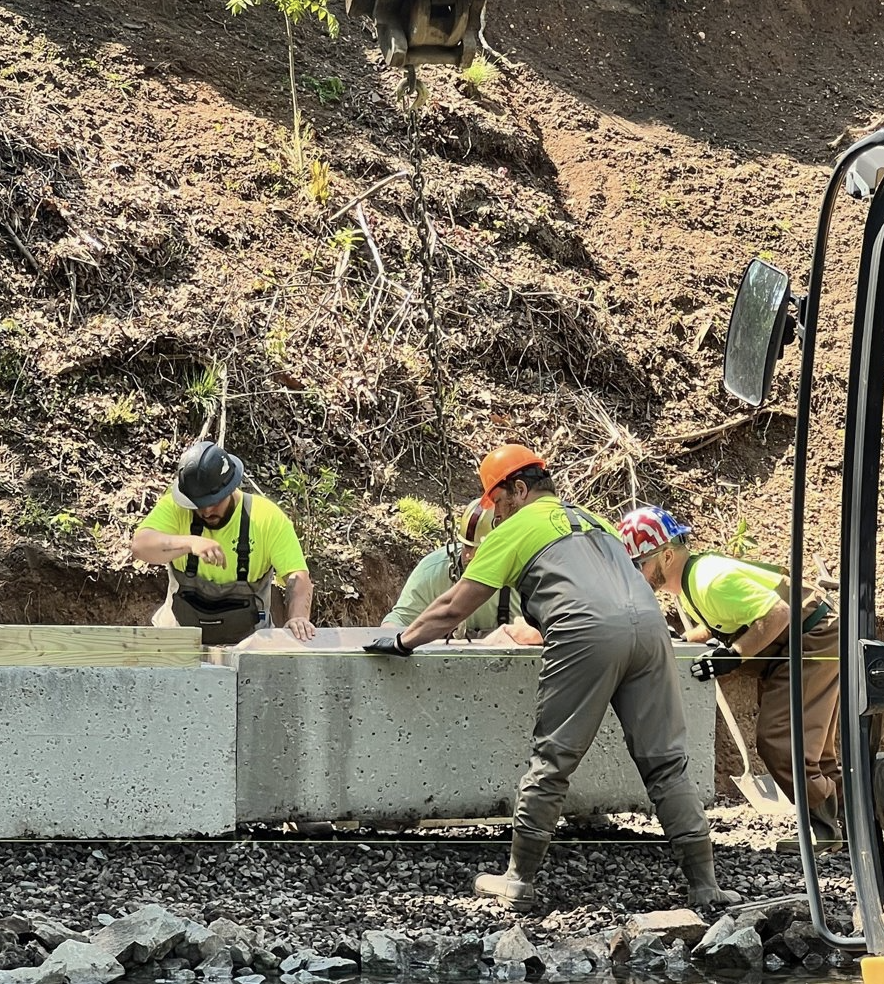
Teamwork was the key to successfully completing a more than 360,000-pound concrete wall now protecting Heather Lane homes that had been threatened by severe yard erosion.
That was Department of Public Works supervisor Len Vidal’s assessment as he discussed the recently finished project during the Borough Council’s Tuesday, May 28 meeting. Vidal gave a presentation that included a powerpoint with photos of the work.
Since the project’s completion earlier this month, it has earned kudos from affected homeowners, Middlesex Borough officials and other community members.
One grateful homeowner in the affected Heather Lane/Holly Court neighborhood succinctly assessed the effort in brief comments before governing body.
“They worked their asses off,” the resident said of DPW members.
Vidal explained the five-day project, noting that it would not have been successful without the work of his entire department and the assistance of excavator L.N. Rothberg & Son and municipal engineer Thomas Herits.
Vidal received a citation from the council for his oversight of the project. He called the work “a group effort.”
One of the endangered Heather Lane homes was deemed uninhabitable in March 2022 after erosion reached its foundation. Officials and affected homeowners have said the erosion worsened after September 2021’s Hurricane Ida.
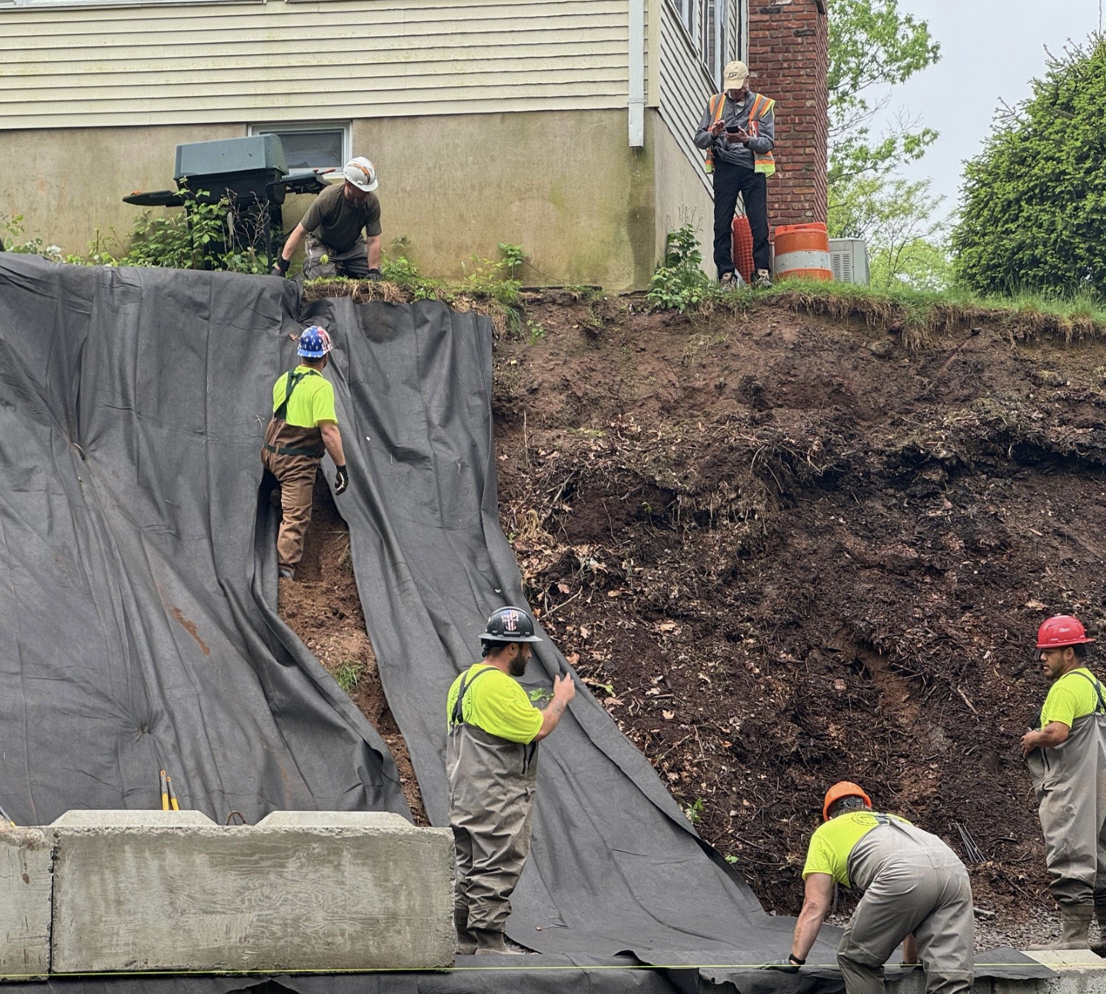
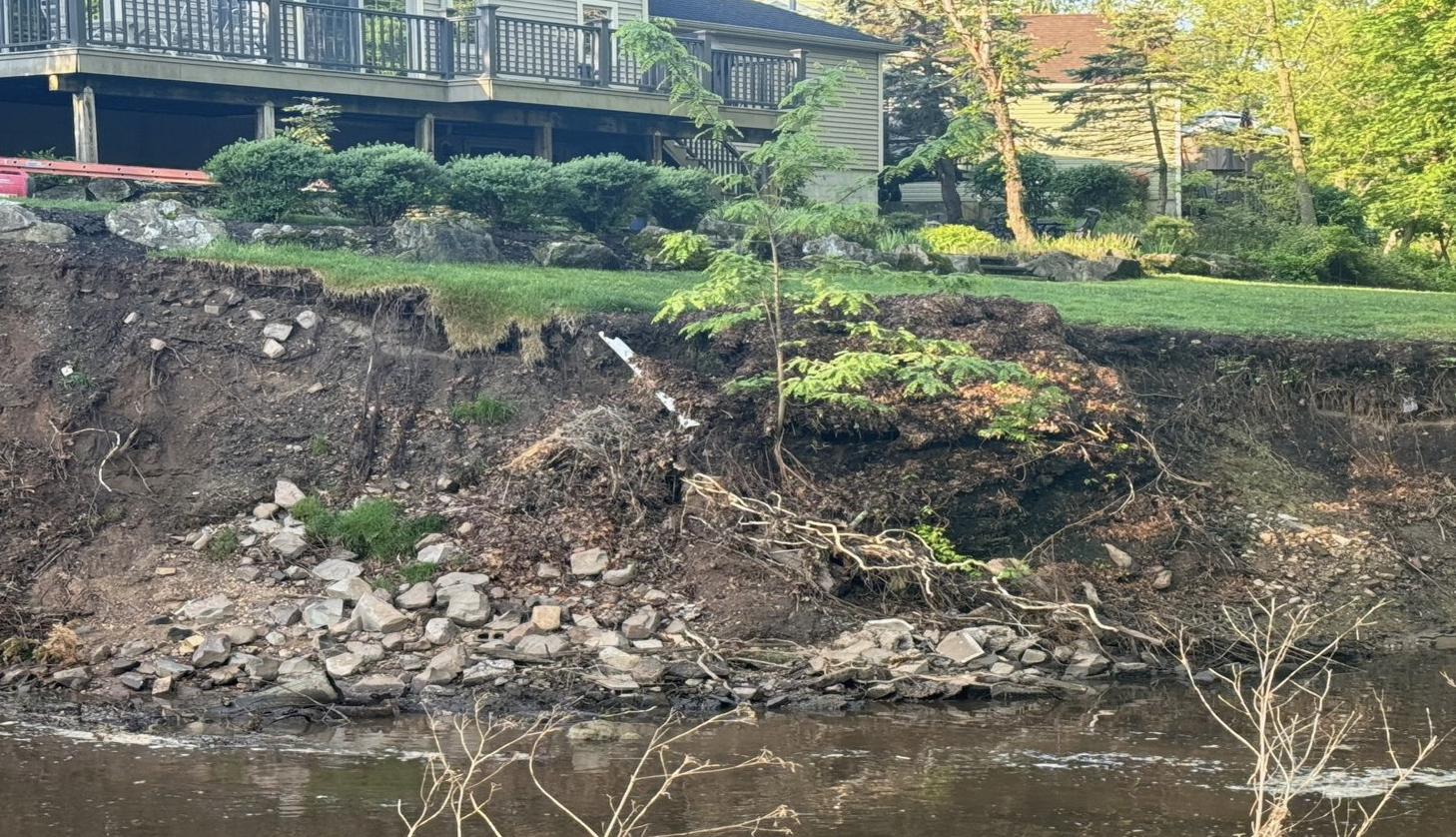
While it was a night for celebrating the achievement, Mayor Jack Mikolajczyk was blunt in his critique of the U.S. Army Corps of Engineers and state officials. Their lack of requested assistance forced the borough to undertake the project itself, the mayor noted.
The Army Corps has refused to take any corrective action for the erosion, which affected homeowners and borough officials contend was amped up by the Green Brook Flood Risk Management Project.
Mikolajczyk said he recently discussed the lack of support from higher levels of government with 21st District Assemblywoman Michele Matsikoudis, who represents Middlesex Borough in Trenton.
“We let them know we’re not happy and it’s not over,” the mayor said.
“We asked for five million dollars,” Mikolajczyk said. “They didn’t even give us five bucks.”
Vidal has characterized the newly built wall as a “semi-permanent fix” but expressed confidence in its sturdiness during the presentation. The wall, he said, “ain’t going anywhere.”
The borough’s application for a $5 million state Resilient Communities Program grant was rejected earlier this year. But officials have said the municipality will reapply. It’s hoped that funding would pay for a longer, more elaborate barrier.
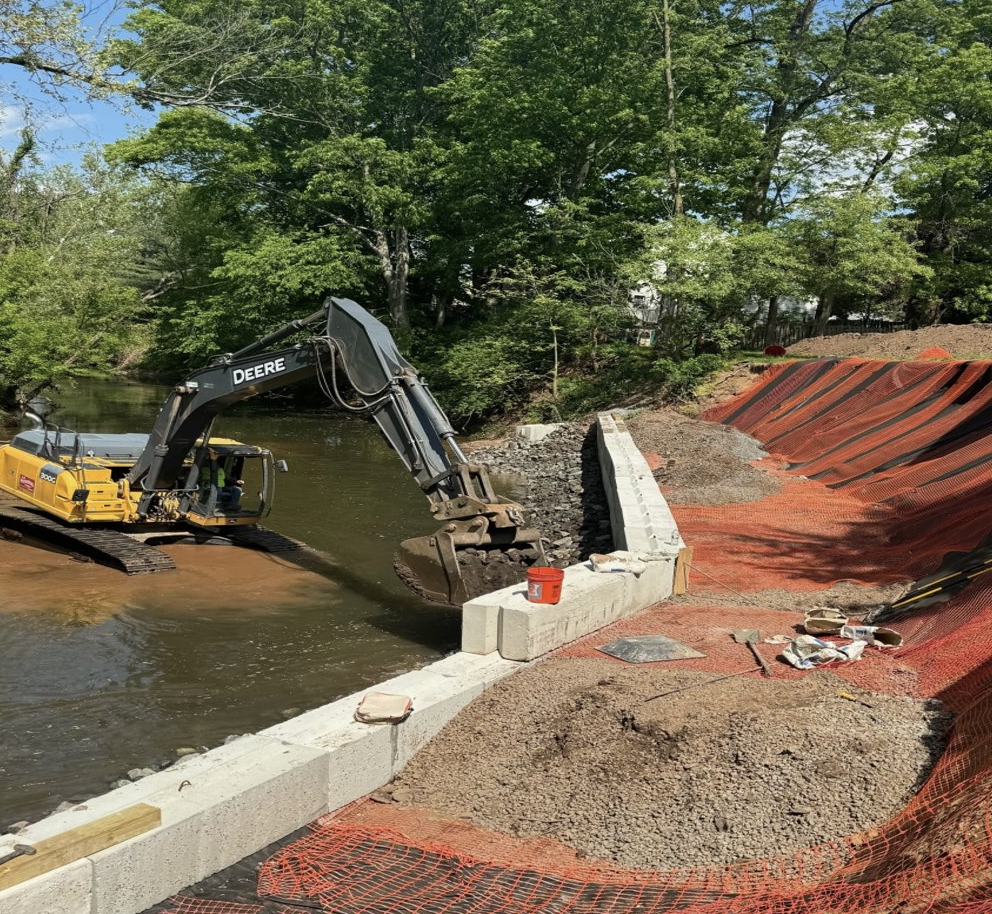
Vidal priced the completed 300-linear-foot wall at $56,237. Given the lack of federal and state help, and the fact that homes were endangered, Mikolajczyk said expenditure of local tax dollars on the work was “the right thing to do.”
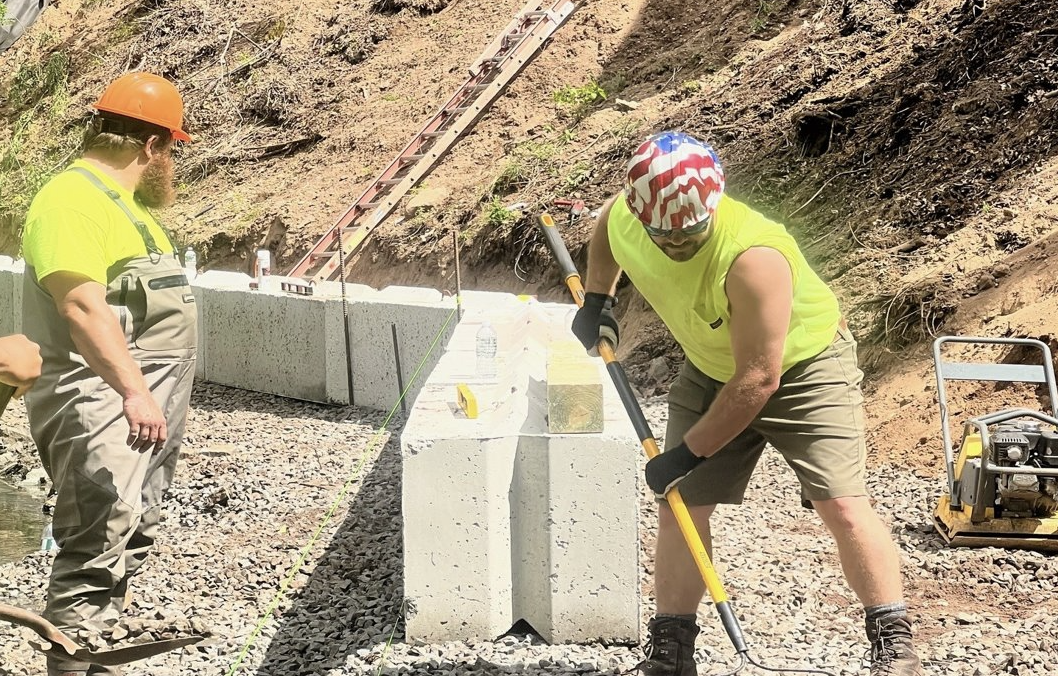
The wall comprises 96 bin blocks, each 2x2x6 feet in size and weighing 3,800 pounds. Vidal likened them to large Legos.
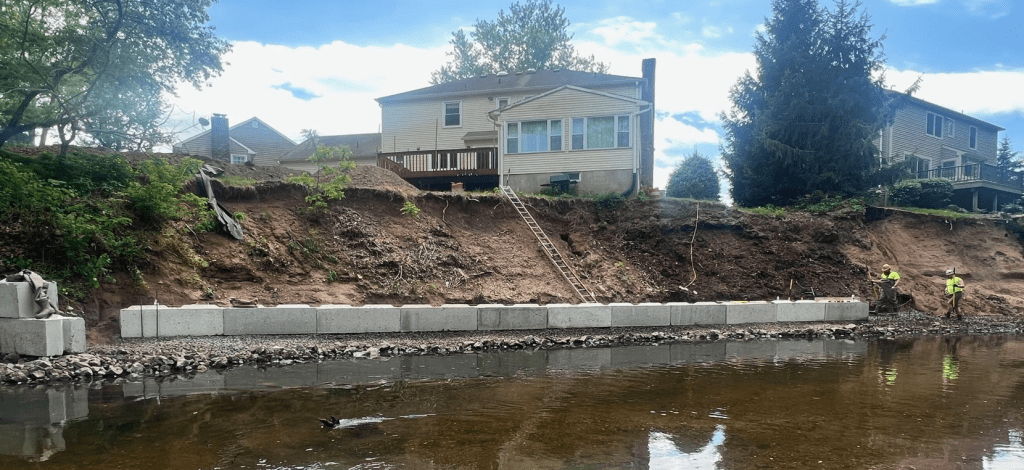
One section of the wall is three block rows high, the other four rows tall. Each section has one row buried beneath the surface.
The key to the project, according to Vidal, was ensuring the bottom block row was level. If not, “the rest of the wall could collapse,” he said.
Along with the bin blocks, the project required 170 tons of Rip Rap, 310 tons of 1.5-inch stone, and 460 tons of 3/4 clean stone.
Four hundred man-hours were expended during the five-day project. The DPW had been stymied from starting the project for weeks due to poor weather. Once it began, department members worked 15-hour days, Vidal said.
Start to finish, including prep time, required 640 hours, according to Vidal.
Owners of two threatened Heather Lanes homes had contacted contractors to inquire about potential erosion protection work. Vidal noted those estimates came in at about $275,000 for each home, far higher than the borough’s cost for the new wall.
Others noted the nature of the project, which required a permit from the state Department of Environmental Protection. DPW members worked on the edge of the stream’s bank to get the blocks in place with the assistance of Rothberg.
“This was inherently dangerous work,” said borough resident Kevin Redzinski, who attended the presentation.
Mikolajczyk concurred that it was “definitely outside of (DPW’s) wheelhouse.”
Borough Administrator Michael LaPlace said the project “shows the value and importance of local government” and the DPW’s “talent and willingness to do good work.”
(Photos that accompanied this post, courtesy of Len Vidal)
Reminder
Subscribe to Inside – Middlesex. Enter your email address to subscribe to this blog and receive notifications of new posts by email. It is absolutely free.
Visit Inside – Middlesex on our new Facebook page.
 Inside - Middlesex
Leave a comment