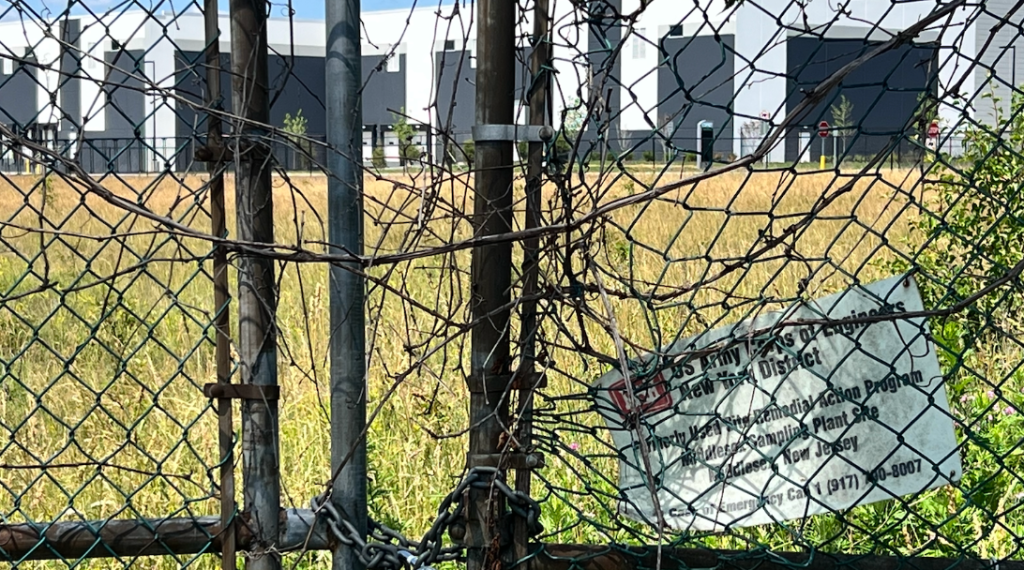
It’s been roughly 80 years since uranium processing commenced at the Middlesex Sampling Plant, part of the Manhattan Project research.
There are still minute traces of that radioactive material, as well as cesium, pervasive in soil and sediment samples taken throughout the region. Those substances were apparently spread in the ensuing decades by wind and water.
That is among the findings of a study conducted by Villanova University environmental science student Christine Polakiewicz during the past 10 months. The study’s goal was to assess the potential spread of radioactive isotopes in the Raritan River watershed due to flooding caused by Hurricane Ida in September 2021.
The U-235 and Cs-137 found are not evident at Erin Brockovich-type alarm levels. There are no suggestions that land owners in Middlesex Borough or nearby towns should vacate their properties.
The readings, however, confirm what many familiar with the town’s history might expect. Residue produced in atomic bomb research – such as what was conducted at the MSP – linger in the area’s soil, sediment and waterways and will continue to do so into the future. That residue was likely spread by past years’ weather events, not only by Ida.
The study’s sampling uncovered another potentially troubling regional issue. Evidence of U-235 and Cs-137 were found upstream from the MSP site, as well as downstream.
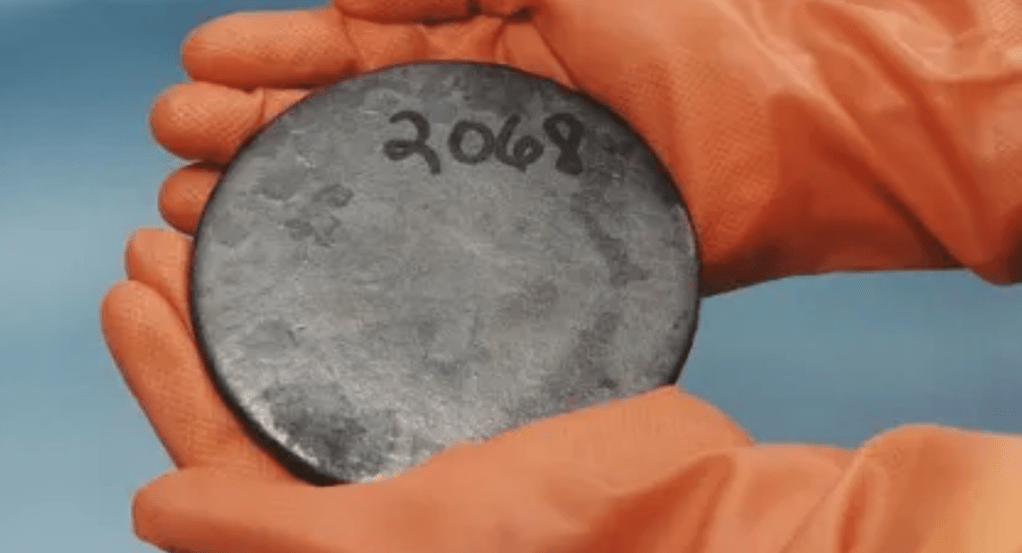
Upstream suggests there is another site contributing to the region’s atomic residue, aside from the MSP location. Exactly where that site could be, is anyone’s guess.
Both uranium and cesium are a by-product of the ore processing done in atomic bomb research. Cesium is just as harmful as uranium, but the latter is better known. Cesium does not occur naturally.
Uranium can occur naturally, but in lower concentrations than those found in the study. Also, the fact that the study’s U-235 readings varied from site to site, indicates that material was being distributed somehow throughout the watershed.
Uranium, thorium and beryllium ores were processed at the MSP site from 1943 to 1967, part of the work that led to the United States’ development of the atomic bomb.
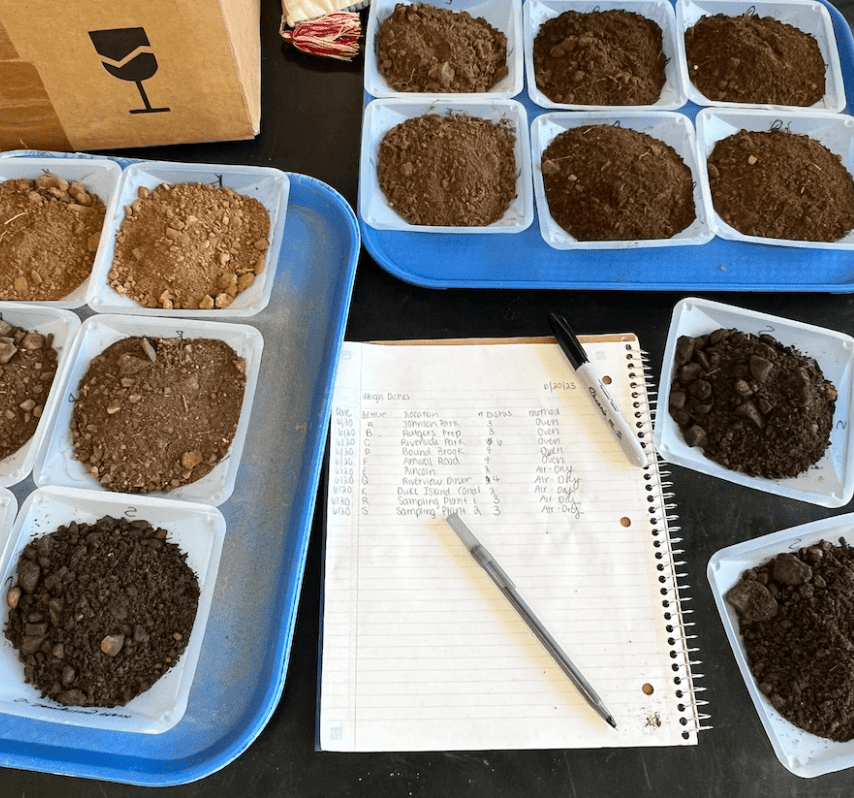
The Villanova study comprised 29 soil samples taken at 21 sites, including several in Middlesex Borough. The sites contained sediment deposits and were susceptible to flooding. The MSP site tends not to flood but is in the watershed. Samples were taken outside its fenced-in perimeter.
Along with the former MSP site on Mountain Avenue, sampled locations included: near the stream running along Cap Lane, near the former Riverview Diner site on River Road, and Victor Crowell Park. All samples were taken from public property.
Other Raritan River Watershed locations were surveyed, including South Bound Brook, Manville, Piscataway and Bridgewater. The samples were analyzed with a gamma spectrometer in a Villanova University lab. Samples were taken both upstream and downstream from the old MSP site.
U-235 was measured in all but one soil sample. Cs-137 was found at every sampled location and in increased amounts upstream from the MSP site. That indicates there was an additional source for the material in the upper watershed.
Sediment grain size analysis revealed a pattern. Larger grain sizes were predominantly observed upstream. Finer fractions comprised a larger portion of deposits in downstream locations.
According to the study, that differential suggests transport of the material was affected by hydrology and topography.
“Radioactivity measurements demonstrated the widespread presence of Cs-137 across all sampled locations,” the study report states, “indicating pervasive contamination within the study area.”
“Analysis of U-235 concentrations showed its ubiquitous presence in most soil samples,” the report adds, “with only one sample showing no detectable U-235 activity.”
Dangerous soil levels of cesium and uranium would be about 100 times the amounts found in the study. Current science suggests the concentrations found pose no threat to humans. A somewhat-comparison would be that a person could ingest a minute amount of paint and suffer no harmful effects. But that same person would not be able to safely swallow a larger amount.
Although minimal, the concentration levels found in the study are not going away any time soon.
U-235’s half-life is 700 million years. Cs-137’s half-life is 30 years. A half-life is the time required before a substance’s existence in nature will be reduced by half.
In 700 million years, the uranium levels found by the study will be cut in half. The half-life numbers also mean that just 30 years ago, the cesium levels found outside the MSP site were double what the study uncovered.
Reminder
Subscribe to Inside – Middlesex. Enter your email address to subscribe to this blog and receive notifications of new posts by email. It is absolutely free.
Visit Inside – Middlesex on our new Facebook page.

 Inside - Middlesex
Leave a comment