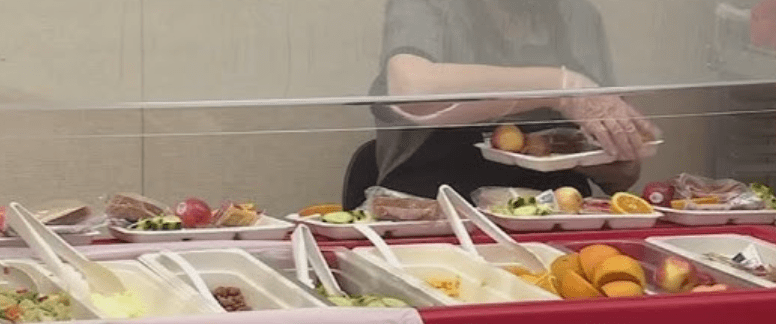
A total of 430 Middlesex Borough students ended the 2023-24 academic year in June owing their school district for unpaid meals.
School Superintendent Dr. Roberta Freeman specified that was the total number of pupils in arrears in an Aug. 28 email. Freeman was responding to questions asked by Greene Avenue resident Laura Thomasey a week earlier at a Board of Education meeting.
Thomasey is a former district teacher and past Borough Council member.
The district reported a total enrollment of 2,066 students last October. The 430 owing students equates to 20% of the district’s total. Freeman did not elaborate as to which district school or schools the indebted pupils attended.
The largest single debt owed by a family was $1,065 in unpaid school meal costs, according to Freeman.
While unpaid school meals are likely galling to some local taxpayers, it is a situation that has occurred with increasing frequency nationwide during recent years.
The federal government paid for students’ school meals during the COVID-19 pandemic years. While that practice ended, some students and their families, have continued to not pay for meals. In some cases, it is due to economic circumstances.
The School Nutrition Association estimated that the nationwide unpaid student meal debt is more than $19 million, according to an article published last February by investigativetv.com. That estimate was thought to be conservative. Among schools that now charge for meals, 96% are reporting challenges with unpaid meal debt, the article said.
Eight states – California, Maine, Minnesota, New Mexico, Colorado, Vermont, Michigan and Massachusetts – have taken legislative steps to fund student meals.
The Georgetown (University) Journal on Poverty Law & Policy noted the economic squeeze felt by some families in terms of qualifying for federally funded school meals.
“The current federal poverty level for a family of four is $30,000,” read an article published in the journal last December. “So families who make more than $39,000 are ineligible for free lunch, and families who make more than $55,000 must pay full price.”
“Unfortunately, the eligibility guidelines leave many children in an impossible spot: their parents make more than 130 percent of the federal poverty level, but not enough to consistently afford full or reduced-price meals,” the article states.
In July, the Middlesex Borough school board voted to cancel the district’s total outstanding meal balance of nearly $41,000, effectively absolving the indebted students from paying. The debt will be funded instead from the board’s 2023-24 budget. The district contracts with Maschio’s Food Services to handle school meals.
In response to Thomasey, Freeman explained the district’s efforts to obtain school meal payments from the indebted students’ families
“The district makes every effort to collect outstanding balances,” Freeman wrote. “The food service director emails guardians daily if their student’s balance exceeds $0.05. When a balance surpasses $20, a letter is sent home.”
“For balances over $50, school secretaries personally contact guardians by phone,” Freeman added. “In severe cases, the building principal contacts families to seek to resolve the problem and offer assistance if needed. Additionally, if the debt remains unresolved, the board attorney has been contacted and has issued notices informing parents of possible legal action.”
Thomasey asked if principals contact parents about other issues.
“Yes, the principal has proactively reached out to parents to discuss other family matters,” Freeman replied. “By maintaining open lines of communication, the principal ensures that the school is aware of and responsive to the family’s needs, providing support and resources as necessary. While there are times when parents may be unwilling to be open about their financial situation, the principal continues to approach these conversations with sensitivity and understanding, always aiming to foster a strong partnership between the school and the family.”
The state is not required to fund unpaid student meal balances, according to Freeman. She wrote that there is no funding in the Middlesex board’s 2024-25 budget to address the issue.
“When local officials determine further collection efforts for delinquent debt are useless or too costly, the debt must be reclassified as ‘bad debt,’ “ Freeman wrote. “Once a delinquent debt is reclassified as a bad debt, it must be written off as an operating loss. Non-profit School Food Service Account resources may not be used to cover costs related to bad debt, such as continued legal and collection costs. Instead, these losses must be restored using non-federal funds. These funds may come from the school district’s general fund, special funding from state or local governments, or any other non-federal sources.”
An online portal maintained by Rutgers University estimates that 40% of Middlesex Borough households are experiencing some level of food insecurity. About 7% live at the poverty level while another 33% are categorized as (ALICE) Asset Limited, Income Constrained, Employed.
Reminder
Subscribe to Inside – Middlesex. Enter your email address to subscribe to this blog and receive notifications of new posts by email. It is absolutely free.
Visit Inside – Middlesex on our new Facebook page.
 Inside - Middlesex
Leave a comment