
To the west lies Bound Brook with numerous new apartment buildings rising to the sky. To the east sits Dunellen, which has upgraded its downtown business district.
In between, there’s Middlesex Borough. Here, six years ago, a redevelopment effort slowed for a variety of reasons including community doubts and the questionable actions of then-soon-to-be indicted mayor Ron DiMura.
Middlesex’s attempt to revitalize itself appears headed for an attempted jumpstart, if the comments of Mayor Jack Mikolajczyk at the Jan. 7 reorganization meeting are an indication.
“We need to attract businesses and developers to our borough,” Mikolajczyk said during his New Year’s address. “Our reputation is that we are difficult to work with and not really interested in change. We need to be amenable to controlled development.”
“Landlocked as we are, we have limited opportunities as it is,” the mayor added. “It’s time to be aggressive and let people know we are open and ready for business.”
The first step in that effort will be to reactivate the Economic Development Committee in the first quarter of 2025, according to Mikolajczyk. That group, which reviewed redevelopment proposals before they were subject to a public hearing, has been dormant since 2019.
Since then, two large scale distribution centers have been built within Middlesex’s borders. Discussions with the redevelopers of those warehouses began prior to DiMura’s resignation that year.
Mikolajczyk’s call to seek development-related investment comes as a modest, new mixed-use building is moving towards completion on Lincoln Boulevard, on the former parking lot across from Cahoot’s tavern. It was approved by the Joint Land Use Board in April 2023.
When finished, the three-story structure named The Lincoln will have retail on its ground floor and a total of six apartments in its top two floors. Marketing of the units online and on social media began early this week. It’s anticipated the apartments will be ready by this spring.
A relatively small project, The Lincoln still generated development-related questions during its JLUB hearing. It was approved in an 8-1 vote. The lone dissenter, current Council President Michael Conahan, had parking concerns. “They did revise their plans and added a couple of spots but it was still not enough for me,” Conahan commented to Inside – Middlesex on Thursday, Jan. 23.
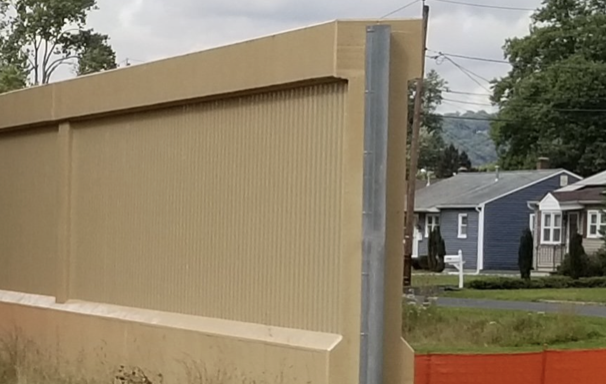
The need to find new sources of tax revenue is driving Middlesex to welcome development. Mikolajczyk noted that the U.S. Army Corps of Engineers’ floodwall project has removed about 90 homes from the borough’s tax base. That has meant a loss of about $900,000 annually in tax revenue.
When new commercial and residential projects bring in added revenue, it does not always equate to relief for local property owners.
New Jersey Future, a nonprofit, nonpartisan organization that promotes sensible and equitable growth, redevelopment, and infrastructure investments, cautions that “chasing ratables” does not always bring a municipality financial solutions.
Commercial ratables aren’t necessarily preferable to residential development, in the opinion of the non-profit.
“On paper it would seem a canny fiscal strategy for a municipality to pursue high-revenue, low-service-cost retail, office and industrial development while
trying to discourage family-friendly housing and the demand for public school expenditures that it generates,” reads an analysis on the New Jersey Future website. “In practice, the evidence is at best inconclusive that such a strategy actually works.”
“Perhaps this is because some of the municipal leaders who are most successful at wooing non-residential development,” the analysis continues, “choose to spend the revenue on additional services and amenities rather than passing the savings along to residents in the form of lower taxes.”
Reminder
Subscribe to Inside – Middlesex. Enter your email address to subscribe to this blog and receive notifications of new posts by email. It is absolutely free.
Visit Inside – Middlesex on our new Facebook page.
 Inside - Middlesex
Leave a comment