
A $50.6 million budget was up for a public hearing and adoption, but the Middlesex Board of Education also had a long-running issue to deal with when it convened on Thursday, April 24.
Roughy 40 teachers and several supporters turned the meeting’s public comments session into a forum on the lack of a new contract for the Middlesex Education Association. The MEA’s prior agreement with the district expired last June 30 with union members continuing to work under the terms of the old contract.
The board again heard teachers speak passionately about their love for their job and students. A few spoke of the financial hardship endured from working without a raise during the current academic year. The comments came only days before the two sides engaged in the latest of a series of mediation sessions.
The MEA has cautioned that the district’s uncertain labor environment could discourage outside applicants for Middlesex staff openings. The special education department is already having difficulty filling positions – which also reflects a statewide shortage.
Some Middlesex special ed openings stretch back to last fall or earlier, according to one teacher who addressed the board.
Kaitlin Palchanes, a borough teacher for more than a decade, said there is an overall teacher need, but special education is facing “crisis level shortages.” Neither board members nor their administrators responded to the dire picture Palchanes painted of the district’s special education staffing.
Inside – Middlesex checked the district website’s Employment Opportunities section on Monday, May 5. They were six job openings which mentioned special education in the title and another that said “special services office” for the location. One of the seven openings had a posting date of Dec. 1, 2023.
“Right now, we are struggling to fill special education positions and the reality is stark,” Palchanes told the board. Fewer teachers are entering the field, while the need of students continues to grow, she said.
The special education shortage has led to increased teacher caseloads, less individualized attention for students and reliance on untrained substitutes to fill vacancies, she added.
Palchanes, who works at Hazelwood School, explained that she is the lone autism instructor, teaching pupils who require one-to-one instruction and support in many areas. There are two autism classrooms. The search has been on for a second autism teacher since May 2024, she said.
With the second autism position still open after nearly a year, a teacher’s assistant fills in, Palchanes said.
“This is not a unique problem for the district,” she added. In 2023-24, a teacher’s assistant covered a Woodland School special ed class “for months on end.”
Palchanes added further details. An elementary level multiple disabilities class started this school year without a teacher. A teacher’s assistant has covered the class. A Middlesex High School multiple disabilities teacher resigned. The district has been posting for the position since mid-October. A teacher’s assistant has been covering for months.
“While we have wonderful, dedicated teaching assistants,” Palchanes said, “they are not required to have teaching certification or be certified to teach special education. These examples serve to show how difficult it is to fill our special education positions with qualified candidates.”
Using teacher’s assistants to cover special education classes takes them away from other classrooms that “desperately need their support,” Palchanes said. She noted the district has unsuccessfully attempted to hire a second Woodland multiple disabilities teacher since May 2023, and a board-certified behavioral analyst since May 2024.
The special ed shortage has ripple effects by overburdening general education teachers while forcing the district to meet federal mandates with reduced resources, according to Palchanes.
‘The toll it takes is not just academic. It is emotional, developmental and deeply human,” she said. “When we can’t fully support our special education programs, we risk failing some of the most vulnerable learners in our district.”
Prior to the open session, the board adopted its budget by a 6-2 vote. Board members Shannon Quinn and Thomas Thornton were opposed. Board member Amanda Baycheck was absent.
The board’s budget will increase the school district portion of local property tax bills by 2%.
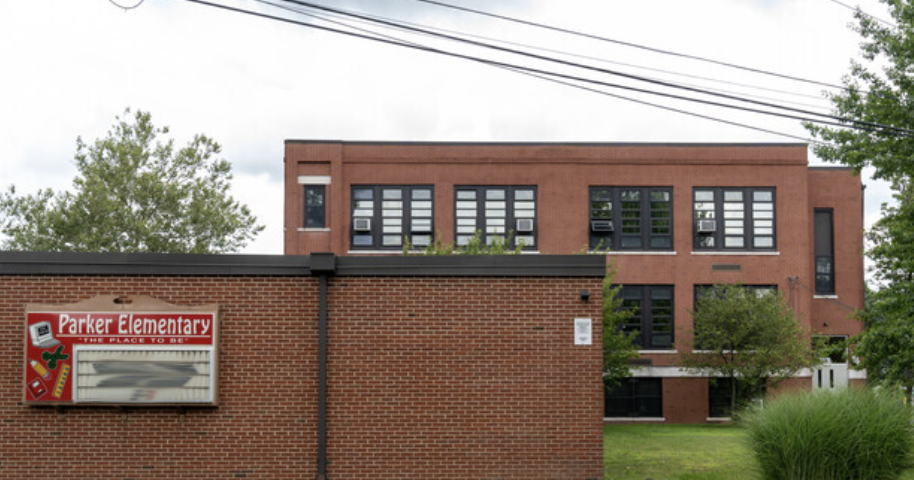
Quinn and Thornton expressed spending concerns. Quinn specifically questioned a planned $1 million Parker School parking lot project.
Board Vice President Sharon Schueler noted the Parker School project is not simply a repaving, but includes drainage and grading work. The $1 million price tag, she said, is an estimate for budgeting purposes.
If the project bid comes in lower than that figure, the unspent balance goes back into the district’s capital fund. If the bid comes in higher, the board can opt not to do the work.
Schueler defended the district’s capital spending, noting that 10 to 15 years ago, the board delayed needed work due to a lack of state aid. Two capital projects each summer “is not a lot for a school district,” she said.
Thornton, however, was unconvinced by the explanation. “It seems like we’re spending a little too much this year to try to get things going,” he said.
Reminder
Subscribe to Inside – Middlesex. Enter your email address to subscribe to this blog and receive notifications of new posts by email. It is absolutely free.
Visit Inside – Middlesex on our new Facebook page.


Leave a Reply