
April 15 is traditionally Income Tax Day, time to pay up or get a refund from the federal and state governments on earnings filings. If you’re a New Jersey property owner, you’re also starting to get an idea what your new real estate tax bill will look like in August.
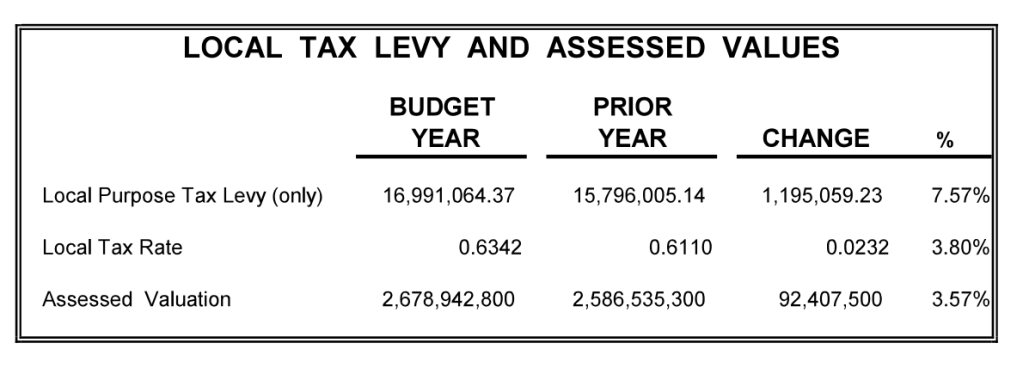
In Middlesex Borough, the unveiling of the property tax picture has been under way for a few weeks. The municipal tax levy will increase 7.5% under the council’s 2026 budget. As proposed, the school tax levy would rise 7.06% for that portion of the Middlesex tax bill. Officials have yet to release the percentage change in the Middlesex County portion of the bill.
A public hearing on the Board of Education’s budget is scheduled for Wednesday, April 29. The hearing on the council’s spending plan will take place on Tuesday, May 12.
The proposed increases are larger than those typically passed on to taxpayers, but are lower than what’s being proposed in some Garden State towns and school districts. The entire state is dealing with rising costs from a state health insurance program for government workers. Some school districts are also experiencing drastic aid cuts.
The Edison school district is proposing a 12% tax increase. Parsippany taxpayers are faced with a 9.5% tax hike. Raritan Borough has introduced a budget that includes a 12% municipal increase.
The Middlesex Borough Council introduced its $26.4 million budget on Tuesday, April 14. A presentation by Mayor Jack Mikolajczyk and the council’s vote were live-streamed. The intro came four days after MIkolajczyk, Acting Administrator Matt Geist and Chief Financial Officer Caroline Benson discussed the municipal spending plan with Inside – Middlesex for roughly two hours.
School Superintendent Dr. Roberta Freeman presented the school district’s 2026-27 budget to the Board of Education on Tuesday, March 24. It occurred during a Committee of the Whole meeting, meaning it was not live-streamed and was seen only by a handful of constituents in the audience.
The following night’s board session was viewable online. Taxpayers who watched saw two board members oppose sending the budget to Middlesex County for review and another board member abstain.
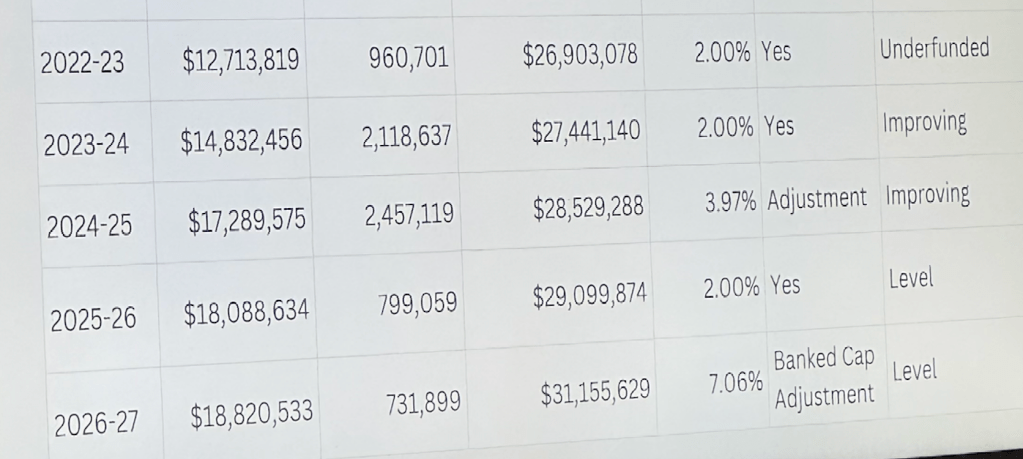
Board member Martin Quinn, who was one of the opponents, is seeking confirmation that a school tax increase is being fueled largely by a more than $1 million increase in a state health insurance plan covering district employees.
“From an initial glance, I don’t see the health care increases that we were talking about last night,” Quinn said, of a comparative analysis he had done. “I’m going to keep digging.”
Both the municipal and school district budgets are expected to soon be posted online for taxpayers to peruse.
Benson said the owner of the average Middlesex home, assessed at $506,000 would pay $3,210 in municipal taxes, an increase of $116 from 2025.
Freeman used last year’s average home value during her presentation..She said the owner of a $483,000 home would pay $276 more in school taxes under the 2026-27 spending plan. Rising health insurance costs, she added, tacked on $1.4 million in budget expense.
The two spending plans are both bedeviled by the health insurance increase. The council’s cost-cutting to mitigate it included several personnel positions.
Six municipal positions have been eliminated through attrition, according to borough officias. Two other full-time jobs have been replaced by part-timers. The affected positions include five in the Department of Public Works.
The number of school administrators has historically been a sore point with Middlesex taxpayers who have weighed in on social media. During the March presentation, Freeman differed, saying, “There is no area in administration, that I can identify, that we can reduce. Admins are not something that drive this budget.” It remains to be seen if constituents will see it that way when the budget hearing occurs.
Answering various questions from past sessions during the March 25 meeting, school officials said the district has 2,039 students and 20 administrative positions, inclusive of central office administration and managers. That equates to about 102 students per admin.
New Jersey school districts typically average approximately 135 to 140 students for every one administrator, according to an online public school fact sheet published by the state Department of Education. That ratio includes principals, assistant principals, central office staff, and supervisors. Staffing ratios vary by district, with some smaller or specialized districts having significantly more administrators per student compared to the state average, according to the education department.
School officials also said the district continues to see students go through the lunch line, obtain meals, and not pay. The lunch program is $48,633 in arrears. Of that total, $16,277 has been incurred during the current academic year. The remaining $32,356 is still outstanding from 2024-25.
Under state law, the district cannot refuse lunch to a student, even if they do not pay, explained Board President Danielle Parenti. The board will continue to attempt to recoup owed funds from non-paying students’ families under a district policy, Parenti said.
Meanwhile, borough officials said they would continue to seek opportunities to chip away at the health insurance expense.
A high-deductible plan for Middlesex municipal employees, which is less expensive than the typical state insurance, will go into effect on June 1. The borough, however, needed to seek the state’s okay twice before gaining the approval to switch. That delay, Mikołajczyk said, cost the municipality an additional $200,000.
Mikołajczyk noted Middlesex Borough taxpayers have services such as garbage collection and sewer use included within their municipal bill. Some towns do not, spurring home and business owners to pay hundreds of additional dollars for them.
Reminder
Subscribe to Inside – Middlesex. Enter your email address to subscribe to this blog and receive notifications of new posts by email. It is absolutely free.


Leave a Reply