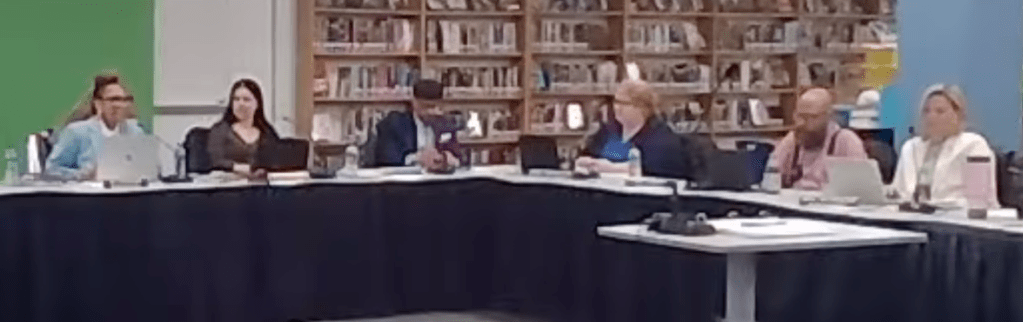
While enjoying sunny August weather, Middlesex Borough property taxpayers will also get some rain on their financial parade. That’s when they’ll start receiving tax bills reflecting the new $52.9 million 2026-27 budget approved by the Board of Education on Wednesday, April 29.
The spending plan received a razor-thin, 5-4 approval. Its 7.06% tax levy increase – the largest school tax hike in recent years – is the product of a banked percentage from prior years and a large increase in employee health insurance costs.
They’ll be paying more in five months time, but local taxpayers showed disinterest during a budget hearing held by the school board on the same evening as the approval. Few attended. Not one taxpayer implored school officials to attempt to whittle the increase.
The board, however, was split on the spending plan. Voting to approve the budget were Board President Danielle Parenti and board members Amanda Bayachek, Todd Nicolay, Patricia Reynolds and Sharon Schueler.
Opposing the spending plan were board members Jeremiah Carnes, Martin Quinn, Justine Decker and Thomas Thornton.
Like the taxpayers, board members were largely silent. Quinn had attempted recently to conduct comparisons to prior spending. Parenti referenced receiving an email from him containing budget questions.
Quinn offered little elaboration after the president mentioned the communication. “It’s very difficult to follow the paper trails,” Quinn said, not long before his “no” vote.
Carnes said he was giving a “big no” to the budget while casting his vote.
During a March presentation, School Superintendent Dr. Roberta Freeman outlined the new budget’s financial ramifications. The owner of the average Middlesex home, assessed at $483,000 in 2025, will pay an additional $267 annually, she said.
Borough officials have said the value of the average borough home is now $506,000 in 2026. School taxes account for 59% of the Middlesex Borough property tax bill.
While the opposing board members appeared to have concerns about the spending plan, Freeman touted it during last month’s presentation. The 7.06% hike, she said, is being driven by contractual salary increases, which compose the largest portion of the budget, and the rising costs of health insurance and special education.
Staff health insurance has risen by more than $1.4 million. The district is undertaking steps such as attrition strategies to mitigate the budget increase, she said.
State law sets a 2% cap on school tax increases, but it is “not a hard cap” with various allowable statutory adjustments, the state Department of Education said on Wednesday, April 29. The DOE was responding to an email from Inside – Middlesex asking if budgets that exceed the 2% figure require voter approval. The Middlesex board has permitted adjustments in the new budget due to the increased health costs and prior banked cap. Those adjustments allow the district to exceed the typical cap.
A banked cap in New Jersey is a mechanism allowing school districts to accumulate unused taxing authority – specifically the difference between their allowed 2% tax levy increase and their actual increase – for use in future budgets. In other words, if the levy is not raised to the permitted maximum in one budget year, that difference can be carried to a subsequent year.
The projected 2026-27 Middlesex Borough district enrollment was calculated at 2,115 students in the new budget, according to the DOE. That’s a decrease of 35 students or down 1.63% from the current academic year. The borough district’s 2025-26 per pupil tax levy cost is $13,525, the state said.
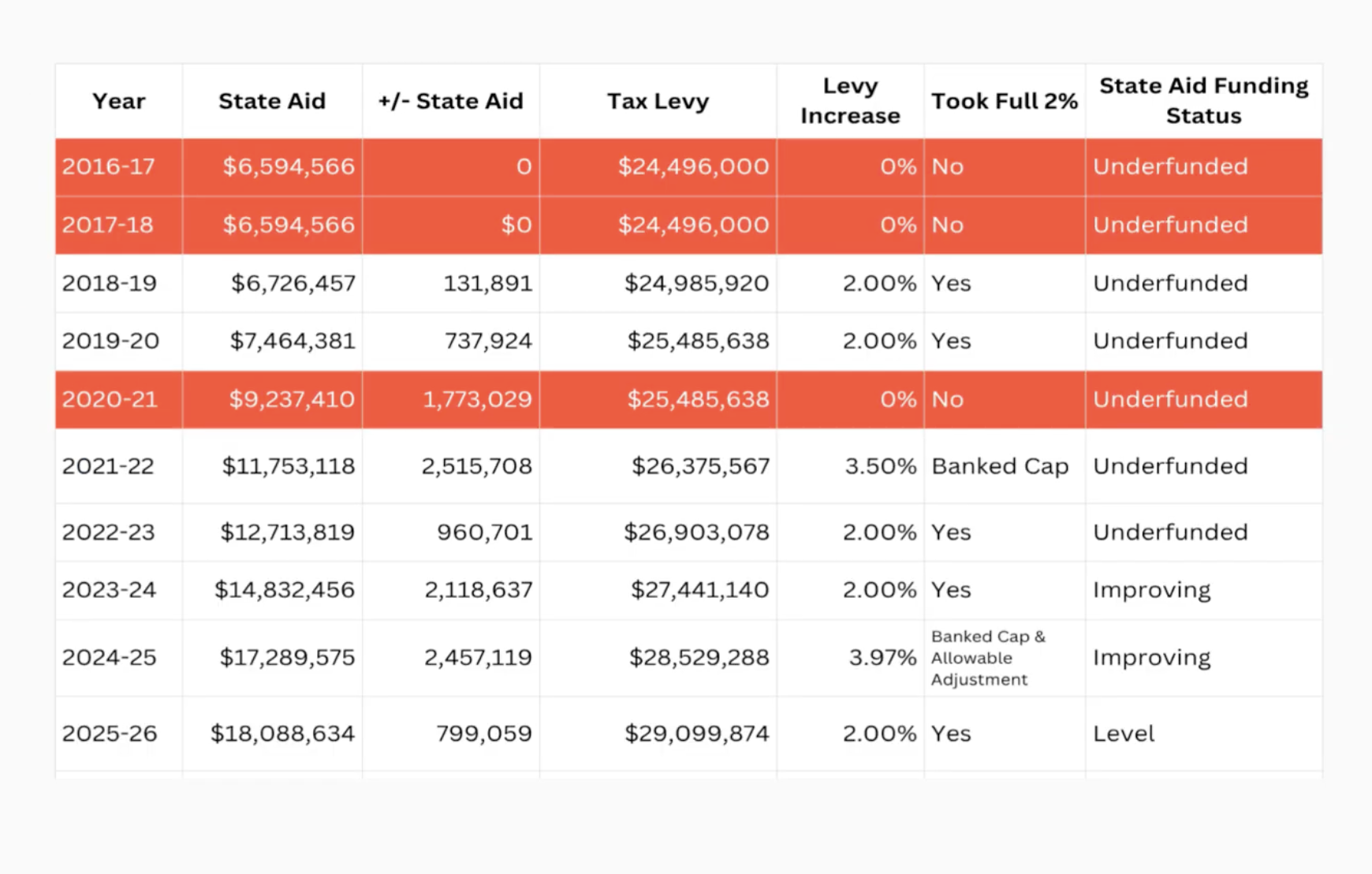
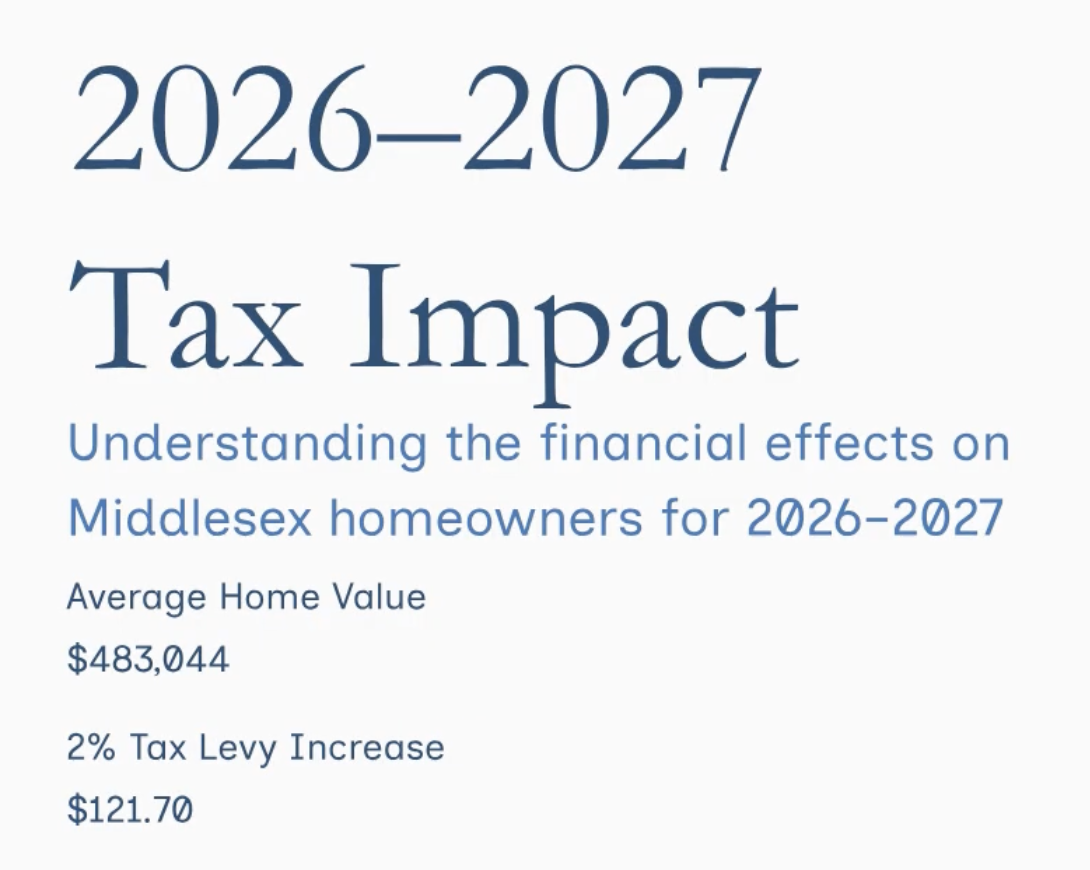
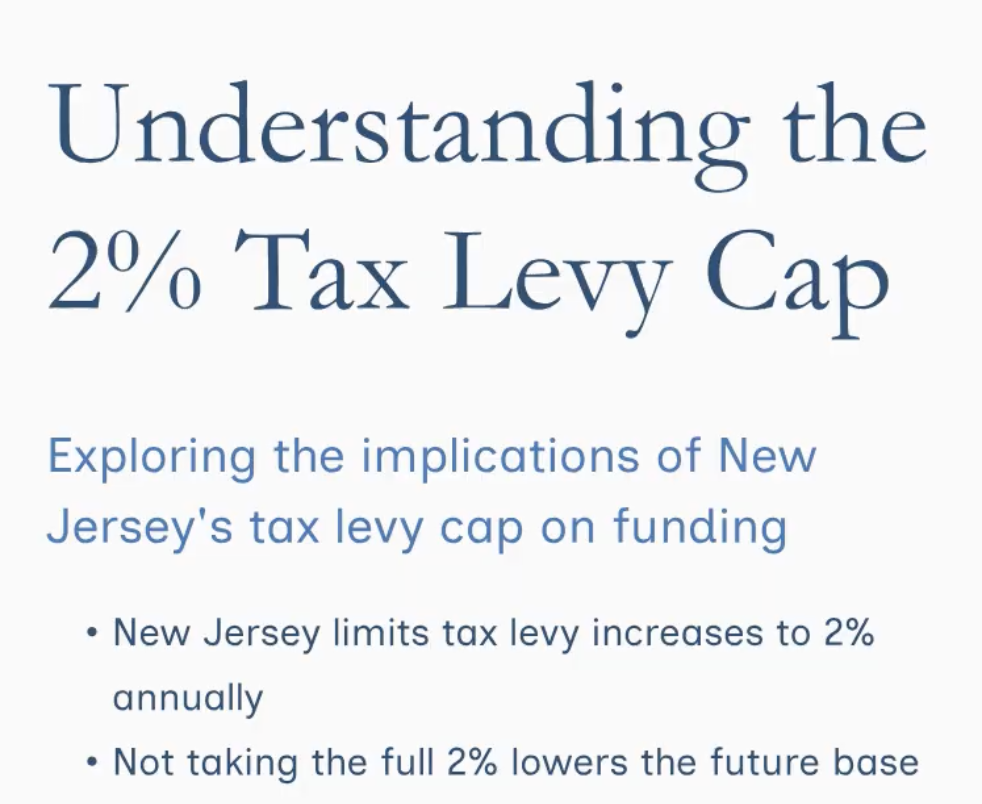
Officials acknowledged at the hearing that school taxes will rise 7% under the new spending plan. But multiple screens in a budget slide show on the district website are not clear on the size of the increase.
One slide is entitled “Understanding the 2% Tax Levy Cap.” The next slide shows district tax levy history, but cuts off before 2026-27. In doing so, the 7.06% rise is omitted. The same chart was used in Freeman’s March presentation, but then it included the coming school year and related tax hike. Still another slide is tagged “2026-2027 Tax Impact.” Beneath the average home value, are the words “2% tax levy increase.”
Reminder
Subscribe to Inside – Middlesex. Enter your email address to subscribe to this blog and receive notifications of new posts by email. It is absolutely free.
 Inside - Middlesex
Leave a comment